
More details
Collapse details
Date Published:
Filesize:
- November 1, 2018
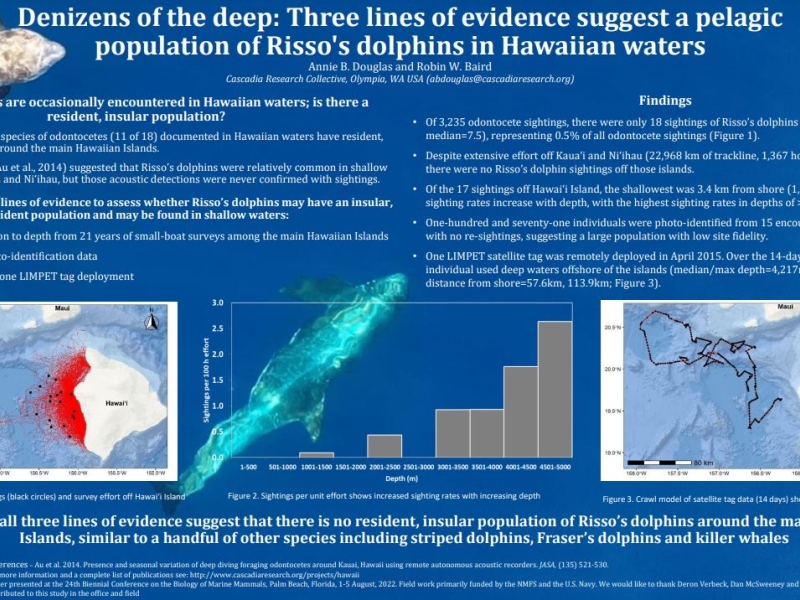
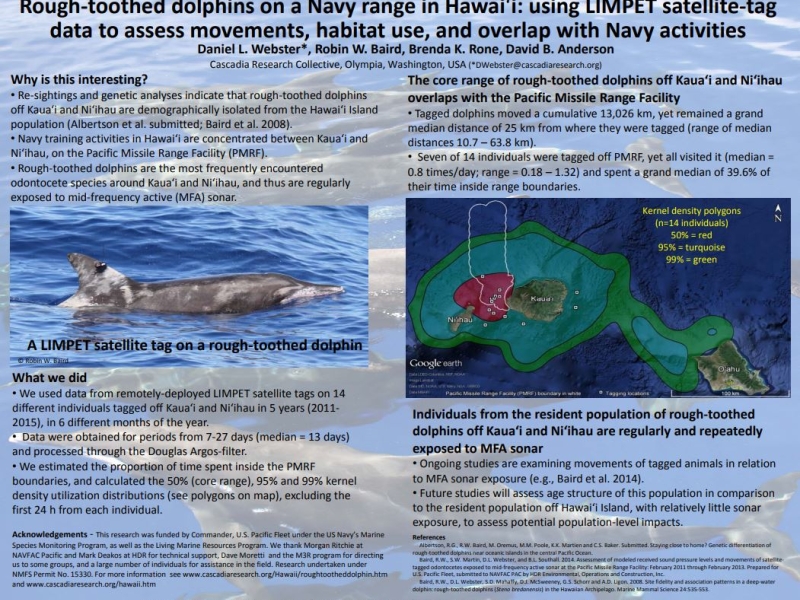
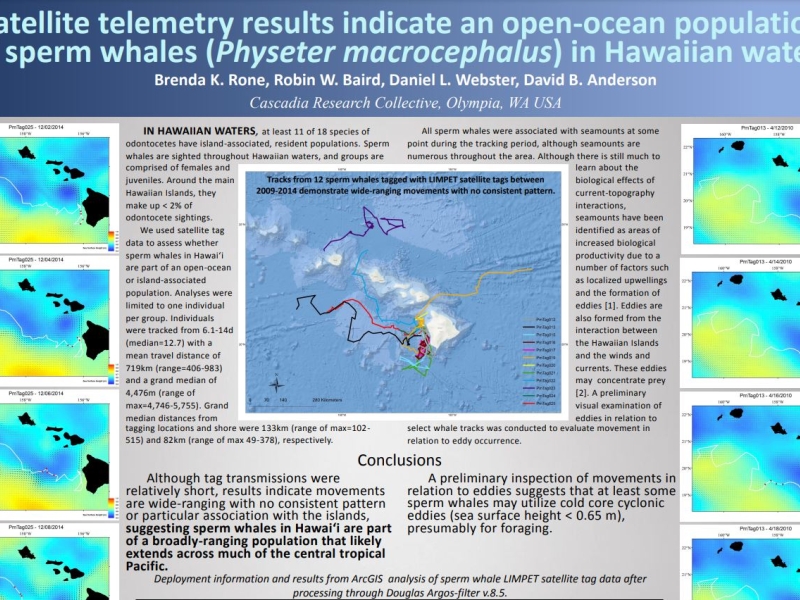
In August 2017, a marine mammal monitoring project was carried out combining boat-based field efforts and passive acoustic monitoring on and around the Pacific Missile Range Facility (PMRF). Commander, Pacific Fleet (PACFLT) funded five days of small-boat effort and the National Marine Fisheries Service funded an additional six days of effort. Information obtained was compared to previous sightings during small-boat effort by Cascadia Research Collective (CRC) off Kauai and Niihau, during 1,119 hr of effort (19,194 km) over nine different years from 2003 through 2016 (see Baird 2016)
- 2,093.16 KB
More details
Collapse details
Date Published:
Filesize:
- February 13, 2022
As part of the long-term United States (U.S.) Navy-funded Marine Species Monitoring Program, from 1-14 August 2021, a combination of boat-based field effort and passive acoustic monitoring was carried out on and around the underwater hydrophone ranges of the Pacific Missile Range Facility (PMRF).
- 4,288.46 KB
More details
Collapse details
Date Published:
Filesize:
- November 8, 2013
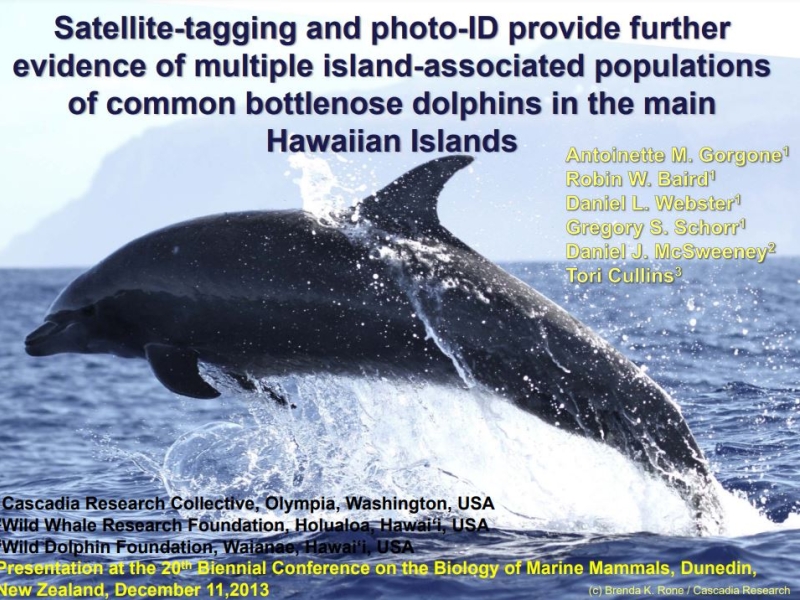
Here we combine results of field efforts funded through the U.S. Navy’s Living Marine Resources Program (through a three-year grant from the Naval Postgraduate School) as well as additional field time in the study area in 2011 and 2012 funded through the Pacific Islands Fisheries Science Center and Commander, Pacific Fleet. We also utilize results from research efforts in the eastern main Hawaiian Islands, off Lāna‘i, Maui, and Hawai‘i Island, to help interpret results from photo-identification and satellite tagging.
- 2,159.00 KB
More details
Collapse details
Date Published:
Filesize:
- October 1, 2019
A number of species of resident and non-resident odontocetes use the waters of the Kaulakahi Channel between Kaua‘i and Ni‘ihau, overlapping with the Pacific Missile Range Facility (PMRF). Submarine Command Courses (SCCs) held at PMRF provide an opportunity to assess exposure and measure odontocete reactions to mid-frequency active sonar (MFAS) being used in realistic training scenarios. The primary goal of this assessment was to estimate MFAS received levels (RLs) for satellite tagged odontocetes and determine whether any large-scale movements occurred in response to hull-mounted surface ship MFAS exposure. Two prior reports have used odontocete satellite tag data and information on MFAS use to estimate RLs for animals tagged in 2011 through 2015.
- 2,845.77 KB
More details
Collapse details
Date Published:
Filesize:
- August 27, 2012
As part of an assessment of habitat use and movements of odontocetes being undertaken in the western half of the main Hawaiian Islands (see Baird et al. 2011, 2012), field operations funded by Commander, U.S. Navy Pacific Fleet were undertaken off of Kaua‘i in January 2012. There were two primary goals of these operations: 1) providing species verification for acoustic detections by the Marine Mammal Monitoring on Navy Ranges (M3R) project on the Pacific Missile Range Facility (PMRF) hydrophone range (see Moretti et al. 2012); and 2) deploying satellite tags prior to a Submarine Commanders Course (SCC) training event to be undertaken off Kaua‘i in February 2012.
- 2,519.53 KB
More details
Collapse details
Date Published:
Filesize:
- February 1, 2011
Movements and Spatial Use of Satellite‐tagged Odontocetes in the Western Main Hawaiian Islands: Results of Fieldwork Undertaken off O‘ahu in October 2010 and Kaua‘i in February 2011
- 1,236.87 KB
More details
Collapse details
Date Published:
Filesize:
- June 7, 2019
As part of a long-term U.S. Navy-funded marine mammal monitoring program, in August 2018 a combination of vessel-based field effort and passive acoustic monitoring was carried out on and around the Pacific Missile Range Facility (PMRF) Kaua‘i prior to a Submarine Commander Course scheduled for mid-August 2018. The purpose of the monitoring effort was to assess the spatial movement patterns and habitat use of cetaceans that are exposed to mid-frequency active sonar and how those patterns influence exposure and potentially responses.
- 10,036.77 KB
More details
Collapse details
Date Published:
Filesize:
- February 1, 2021
As part of a long-term U.S. Navy-funded marine mammal monitoring program, in February 2020 a combination of vesselbased field effort and passive acoustic monitoring was carried out on and around the Pacific Missile Range Facility (PMRF) off Kaua‘i prior to a Submarine Command Course scheduled for mid-February 2020. The purpose of the monitoring effort was to assess the spatial movement patterns and habitat use of cetaceans that are exposed to midfrequency active sonar and how those patterns influence exposure and potentially responses. Results from this effort were compared with previous Cascadia Research Collective (CRC) survey effort and photo-identification and tag data from Kaua‘i, based on surveys in 11 different years since 2003.
- 4,010.56 KB
Effects of Navy sonar on whales and dolphins in the Hawaiian Islands: some data, some speculation, some gaps..
Presentation to the Hawaiian Islands Humpback Whale National Marine Sanctuary Advisory Council (virtual event) .
More details
Collapse details
Date Published:
- September 15, 2020
- 5,898.74 KB
Line-transect Abundance Estimates of Cetaceans in U.S. Waters around the Hawaiian Islands in 2002, 2010, and 2017.
NOAA technical memorandum NMFS PIFSC. 2021.
115. https://doi.org/10.25923/daz4-kw84
More details
Collapse details
Date Published:
Publication:Ocean:Region:Species:
- January 1, 2021
The Hawaiian Islands Cetacean and Ecosystem Assessment Survey (HICEAS) is a recurring ship-based, line-transect survey designed to estimate cetacean abundance in the entirety of the Hawaiian EEZ.
- Blue whale
- Bryde's whale
- Humpback whale
- Minke whale
- Sei whale
- Blainville's beaked whale
- Bottlenose dolphin
- Goose-beaked whale
- False killer whale
- Fraser's dolphin
- Killer whale
- Longman’s beaked whale
- Melon-headed whale
- Pygmy killer whale
- Risso's dolphin
- Rough-toothed dolphin
- Short-finned pilot whale
- Sperm whale
- Spinner dolphin
- Spotted dolphin
- Striped dolphin
Targeted surveillance detected novel beaked whale circovirus in ten new host cetacean species across the Pacific basin.
Frontiers in Marine Science. 2023.
9:945289
More details
Collapse details
Date Published:
Publication:Ocean:Region:Species:Methods:
- January 25, 2023
The first cetacean circovirus, beaked whale circovirus (BWCV), was recently reported in a Longman’s beaked whale (Indopacetus pacificus) stranded in Hawai‘i and represents an emergent disease with unknown population impacts. In other species, circovirus infection may cause mortality or opportunistic co-infection by other pathogens. We report on a targeted surveillance of stranded cetaceans in the Pacific basin, including archived beaked whale species, strandings where pathological findings suggested disease presence, mass stranded animals, and additional individuals to represent a broad range of Hawaiian cetacean species. Archived tissues primarily from the brain, kidney, liver, lung, spleen, and lymph nodes of individuals stranded between 2000 and 2020 (n=30) were tested by PCR for the presence of BWCV.
More details
Collapse details
Date Published:
Filesize:
- January 1, 2016
A shore-based platform, incorporating two high-powered 25 × 150-millimeter binoculars ("Big Eyes"), was evaluated as an alternative approach for surveying marine areas for protected species (marine mammals and sea turtles). During a pilot study at a test site on Oahu (278-meter [m] elevation), humpback whale (Megaptera novaeangliae) blows were visible through Big Eyes at 37 kilometers (km) away in Beaufort Sea State (BSS) 2. This suggests the approach could be effective at detecting baleen and sperm whales from long distances, priority species under the United States Department of the Navy's Marine Species Monitoring Program.
- 3,303.10 KB
Surveying marine mammals with high-powered "bigeye" binoculars from a shore-based platform.
21st Biennial Conference on the Biology of Marine Mammals .
More details
Collapse details
Date Published:
Filesize:
- December 13, 2015
A shore-based platform, incorporating high-powered 25×150mm binoculars ("bigeyes"), was evaluated as an alternative approach for surveying marine areas for protected species (marine mammals and sea turtles). During a pilot study at a test site on Oahu (273m elevation), humpback whale blows were visible through bigeyes 37km away in Beaufort Sea State (BSS) 2. This suggests the approach could be effective at detecting baleen and sperm whales from long distances, priority species under the U.S. Navy's Marine Species Monitoring Program. Systematic scans using bigeyes were performed in Guam over 20 days from a north-facing (193m) and a northeast-facing (157m) shore station in May 2014 and March 2015. These two sites were chosen because of mostly unobstructed views of the ocean, as well as generally high BSS that prohibit visual surveys from small vessels in this area. A SnapZoom digiscoping adapter, equipped with an iPhone or GoPro, was attached to the bigeye eyepiece allowing collection of photos and video, complementing supertelephoto (500-800mm) photography on a DSLR to assist with species confirmation. Observers recorded 33 odontocete sightings comprised of 4 confirmed species (spinner and bottlenose dolphins, pilot and melon-headed whales), but no baleen or sperm whales were observed. Several sightings were distant from shore, including two unidentified dolphins observed 9 km offshore in BSS 6, cued by diving birds, and a group of 160 melon-headed whales 14km offshore in BSS 5. The species observed and the sighting rate of 0.28 per hour, or 1.7 per day, were comparable to results from smallvessel surveys in Guam, suggesting an overall low density of marine mammals, and large whales in particular, during this time of year. These results demonstrate that shore-based surveys can provide an alternative means of surveying an area where use of other research platforms are impractical or cost prohibitive.
- 91.65 KB
More details
Collapse details
Date Published:
Filesize:
- May 23, 2023
In the Pacific the Marine Mammal Monitoring on Navy Ranges (M3R) program maintains systems that continuously run algorithms to detect, classify and localize marine mammals year-round on the U.S. Navy’s deep-water Southern California Antisubmarine Warfare Range (SOAR) in Southern California and Pacific Missile Range Facility (PMRF) off Kauai, Hawai’i. Long-term archive data collected on these ranges allows for numerous types of studies on species inhabiting the ranges, including the monitoring of abundance and distribution, behavioral responses to naval activities, and habitat usage. They also provide the opportunity to study ambient noise and soundscapes.
- 6,319.26 KB
More details
Collapse details
Date Published:
Filesize:
- January 1, 2012
In order to support the U.S. Navy in meeting regulatory requirements for monitoring established under the Final Rules and to provide a mechanism to assist with coordination of program objectives under the ICMP, this survey was conducted to confirm the Marine Mammal Monitoring on Navy Ranges (M3R) acoustic detections and marine mammal satellite tagging was prior to a training event, the Submarine Commander’s Course exercise, which would be conducted in the same area during February 2012.This report presents the methods and preliminary results of a vessel-based visual and acoustic survey effort that was conducted in conjunction with a tagging and species-validation project
- 2,313.85 KB
More details
Collapse details
Date Published:
Filesize:
- November 1, 2012
The first phase to integrate the historical sum of these U.S. Navy-sponsored visual survey efforts for marine species monitoring in the HRC was prepared by Uyeyama (2011). This report represents the second phase of that effort and presents an overview of monitoring survey effort to date in the HRC. Available data from visual surveys performed by both contractor-led efforts and U.S. Navy in-house surveys was compiled and processed in order to: 1. Create a geographic information system (GIS)-based summation of all survey tracks that can be easily visualized. 2. Construct a geo-referenced database of sightings that can be queried by species, observer platform, Beaufort Sea State (BSS), season, or other sighting/survey variables. 3. Conduct an enhanced analysis of sighting success with respect to survey platform, field protocol, and environmental conditions. 4. Inform and adjust data collection procedures on future surveys as needed to reflect lessons learned from sighting data compilation efforts presented here. 5. Provide information to enhance informed management of marine protected species in the HRC and support the adaptive management process that is part of the ICM
- 19,704.58 KB
- Hawaiian Monk Seal
- Green turtle
- Bryde's whale
- Humpback whale
- Minke whale
- Sei whale
- Blainville's beaked whale
- Bottlenose dolphin
- Goose-beaked whale
- Fraser's dolphin
- Killer whale
- Longman’s beaked whale
- Melon-headed whale
- Pantropical spotted dolphin
- Pygmy killer whale
- Risso's dolphin
- Rough-toothed dolphin
- Short-finned pilot whale
- Spinner dolphin
- Striped dolphin
More details
Collapse details
Date Published:
Filesize:
- March 1, 2012
This report presents the results of the Guam and Saipan Marine Species Monitoring: Winter-Spring Survey conducted on the motor vessel (M/V) Sea Fantasy (Guam survey) and the M/V Super Emerald (Saipan survey) from 15 to 29 March 2012. The objective of the 2012 survey effort was to conduct baseline surveys to further document marine mammal and sea turtle occurrence in nearshore waters around the island of Guam and Saipan. The approach primarily followed opportunistic survey protocols used in recent surveys around Guam (Ligon et al. 2011; HDR 2011), which remained within 10 kilometers (km) or 5.4 nautical miles (NM) of the coastline.
- 998.39 KB
More details
Collapse details
Date Published:
Filesize:
- September 19, 2024
This report presents a geographic information system (GIS)-based overview of the sighting records obtained during marine species monitoring effort (a total of 12 U.S. Pacific Fleet-funded surveys) to date in the MIRC. Also included are incidental marine mammal and sea turtle sightings made since 1965 on non-dedicated surveys in the region.
- 14,571.64 KB
More details
Collapse details
Date Published:
Filesize:
- August 1, 2024
This report summarizes the results of satellite-tagging efforts conducted before Submarine Command Course (SCC) training events in August 2021 and 2022, at the Pacific Missile Range Facility (PMRF) off the island of Kauaʻi. Researchers tagged 21 delphinids to observe their behavior before, during, and after the SCCs, to estimate received levels (RLs) of mid-frequency active sonar (MFAS).
- 5,346.69 KB
More details
Collapse details
Date Published:
Filesize:
- July 1, 2025
In August 2023 and February 2024, Cascadia Research Collective (CRC) conducted small boat-based satellite tagging of odontocetes at the Pacific Missile Range Facility (PMRF), with acoustic support from Naval Information Warfare Center (NIWC) Pacific and Naval Undersea Warfare Center (NUWC) Newport, directing the tagging boat towards locations of acoustic detections on the range. Seventeen days of tagging effort were conducted over the two years during the biannual Submarine Command Course (SCC) training events. In total 19 odontocetes were tagged: 14 short-finned pilot whales (Globicephala macrorhynchus), 3 common bottlenose dolphins (Tursiops truncatus), 1 pantropical spotted dolphin (Stenella attenuata), and 1 melon-headed whale (Peponocephala electra). Additionally, 3 humpback whales (Megaptera noveangliae) were tagged in concert with this effort to test new tags, and that data was also analyzed herein
- 8,338.72 KB
More details
Collapse details
Date Published:
Filesize:
- October 1, 2010
This report summarizes work conducted in FY2009-FY2010 with Navy support to characterize marine mammal sounds related to passive acoustic monitoring in the Hawaii Range Complex (HRC). Existing acoustic data from the Hawaii Range Complex area were analyzed to provide better descriptions of acoustic signals by species.
- 1,122.87 KB
More details
Collapse details
Date Published:
Filesize:
- September 2, 2014
an effort to further develop a record of cetacean occurrence in the region, as well as to gather photos and biopsy samples and deploy satellite tags for population studies, the Pacific Islands Fisheries Science Center's (PIFSC) Cetacean Research Program (CRP) conducted surveys for cetaceans in the waters surrounding Guam and the CNМІ (Figure 1) during 2010-2014. This research was carried out in partnership with the U.S. Navy and is expected to continue through 2015. Detailed reports for each survey year were submitted to the Navy (Oleson and Hill 2010, Ligon et al. 2011, Hill et al. 2012, Hill et al. 2013).
- 4,374.27 KB
More details
Collapse details
Date Published:
Filesize:
- January 17, 2018
The Pacific Islands Fisheries Science Center’s (PIFSC) Cetacean Research Program (CRP) has been conducting visual surveys and long-term acoustic monitoring for cetaceans in the waters surrounding Guam and the Commonwealth of the Northern Mariana Islands (CNMI) as part of an ongoing effort to develop a record of cetacean occurrence in the region. Visual surveys have been conducted aboard small boats (7.6–12.2 m) since 2010 off the southernmost islands of the Mariana Archipelago (Guam, Rota, Saipan, Tinian, and Aguijan). These surveys include the collection of photographs for individual identification, tissue samples for genetic analysis of population structure, and the deployment of satellite tags for assessment of individual movements throughout the broader region.
- 2,542.16 KB
More details
Collapse details
Date Published:
Filesize:
- March 1, 2019
The PIFSC CRP has conducted research on cetaceans in the Mariana Archipelago since 2010. A cooperative effort with funding from U.S. Navy Pacific Fleet and PIFSC has included summer and winter small-boat surveys off the southernmost islands (Saipan, Tinian, Aguijan, Rota, and Guam), development of photo-ID catalogs, analysis of collected tissue samples and satellite telemetry tag data, and shipboard visual and PAM surveys in portions of the EEZ in 2010 and 2015. PIFSC has maintained long-term PAM on moored recorders off Saipan and Tinian (since 2010) and off Pagan (since 2015) as part of the Pacific Islands Passive Acoustic Network (PIPAN). The goal of these efforts is to collect the data necessary to conduct population assessments for cetaceans within the Mariana Archipelago, including the determination of their occurrence, population structure and abundance, movements, distribution, and habitat use.
- 6,884.39 KB
Cetacean Research in the Marianas.
NMFS-PIFSC External Program Review of Protected Species Science .
More details
Collapse details
Date Published:
Filesize:
- April 16, 2026
Goals: Understand species occurrence and distribution. Determine the population structure and abundance of the those species. Study the movements and habitat use of individuals and populations. Methods: Small boat-based and ship-based surveys. Passive acoustic recordings (HARPs & towed array). Photo-ID, biopsy sampling, and satellite tagging.
- 5,971.92 KB
Differences in melon-headed whale (Peponocephala electra) whistle characteristics between sympatric populations in Hawaii.
20th Biennial Conference on the Biology of Marine Mammals .
More details
Collapse details
Date Published:
Filesize:
- December 9, 2013
Melon-headed whales (Peponocephala electra) are found throughout the tropics, primarily in pelagic waters but with some being found near-shore around oceanic islands. This species is considered to be sensitive to sound, with one nearmass stranding event in Hawaiian waters associated with a naval exercise. However, relatively little is known of the acoustic behavior of this species. Here we combine multiple passive acoustic tools, including suction-cup attached acoustic tags (DTAGs) and a broadband recorder, the DMON, to gather baseline, broadband bioacoustic behavior data for melon headed whales. Further, two distinct melon-headed populations are compared: the Kohala resident population (KRP) and the Hawaiian Islands population (HIP). DMONs recorded from a towfish and drifter buoy setup. Three animals were tagged, two from the KRP population (estimated group sizes 280 and 350 ! individuals) and one from the HIP population (estimated group size of 350 individuals). In total, 1096 and 329 whistles have been identified from the KRP and HIP tag recordings, respectively. Analyses included spectral and temporal characteristics of the whistles, variability of these signals and whistle type categorizations. Data suggest variation between melon-headed whale populations in whistle duration (mean: KRP – 0.99 s; HIP – 0.75 s), start frequency (mean: KRP – 5.1 kHz; HIP – 5.8 kHz), end frequency (mean: KRP – 4.8 kHz; HIP – 11.5 kHz), peak frequency (mean: KRP – 5.5 kHz; HIP – 7.6 kHz), and centroid frequency (mean: KRP – 7.7 kHz; HIP – 10.1 kHz). No overlap in whistle type was apparent between or within populations, which suggests that individual animals may produce semi-stereotyped calls. These are the first broadband comparisons of melon-headed whale signals. The whistle characterization differences suggest automatic detection and classification algorithms can be used to identify melon-headed whales in Hawaiian waters.
- 328.32 KB
Biologically Important Areas II for cetaceans within U.S. and adjacent waters – Hawaiʻi Region.
Frontiers in Marine Science. 2023.
10:21
More details
Collapse details
Date Published:
Publication:Ocean:Region:Species:Methods:
- January 25, 2023
In this assessment we incorporated published and unpublished information to delineate and score Biologically Important Areas (BIAs) for cetaceans in the Hawaiʻi region following standardized criteria. Twenty-six cetacean species have been documented in Hawaiʻi. Eleven odontocete species have distinct small populations resident to one or more island areas: rough-toothed dolphins, pantropical spotted dolphins, common bottlenose dolphins, spinner dolphins, short-finned pilot whales, false killer whales, pygmy killer whales, melon-headed whales, Blainville’s beaked whales, Cuvier’s beaked whales, and dwarf sperm whales.
Species diversity and abundance at a cetacean "hot spot" off Cape Hatteras, North Carolina, USA.
21st Biennial Conference on the Biology of Marine Mammals .
More details
Collapse details
Date Published:
Filesize:
- December 13, 2015
We have been conducting ongoing monthly aerial surveys off Cape Hatteras, NC, USA as part of the US Navy's marine species monitoring program in the Atlantic since 2011. We utilize line transect survey methods and extensively photograph all sightings to confirm species identification. Survey tracklines extend from shallow continental shelf waters, across the shelf break, to deep pelagic waters. From May 2011 through December 2014, 26,131km of trackline were flown, and 9,941 individual cetaceans were documented during 437 encounters. Nineteen species of cetaceans, including three mysticetes (Balaenoptera physalus, B. acutorostrata, Megaptera novaeangliae), five deep-divers (Physeter microcephalus, Kogia spp., Ziphius cavirostris, Mesoplodon europaeus, M. mirus), and eleven delphinids (Tursiops truncatus, Stenella frontalis, S. attenuate, S. coeruleoalba, S. clymene, S. longirostris, Steno bredanensis, Peponocephala electra, Lagenodelphis hosei, Grampus griseus and Globicephala macrorhynchus) were encountered. Similar surveys at the adjacent Onslow Bay, NC site yielded only 257 sightings (4,773 individuals representing nine species) despite nearly two times the survey effort flown (48,698km). At Cape Hatteras, minimum abundance estimates (i.e. uncorrected for availability or perception bias) were generated using spatio-temporal density surface modelling for species with sufficient detections. Predicted monthly abundance of T. truncatus varied between 170 (95% confidence interval; 0 - 17,100) and 3,450 (300 - 8,510). Monthly Stenella spp. abundance varied between 110 (0 - 360) and 1,720 (400 - 5,390). Monthly abundance of G. macrorhynchus varied between 10 (0 - 960) and 1,230 (220 - 4,300). These results demonstrate that the waters off Cape Hatteras support both higher diversity and density of cetaceans than adjacent waters along the US Atlantic coast. This site is included in the area of interest identified in six pending permits for large-scale, commercial seismic surveys. We suggest that the high density and diversity of cetaceans at this site warrants a special degree of concern by the US Bureau of Ocean Energy Management.
- 92.54 KB
More details
Collapse details
Date Published:
Filesize:
- April 22, 2013
This is the fifth progress report of a monitoring program for protected marine species in waters offshore Cape Hatteras and Onslow Bay, North Carolina and Jacksonville, Florida. The results of aerial line transect surveys and vessel-based photo-ID surveys and passive acoustic monitoring are reported for the period from January 2012 through December 2012.
- 49,501.51 KB
More details
Collapse details
Date Published:
Filesize:
- March 22, 2004
Aerial surveys of marine mammals were performed as part of the Marine Mammal Monitoring on Navy Undersea Acoustic Ranges (3MR) program. Surveys were performed in three regions: a) Pacific Missile Range Facility (PMRF), Barking Sands, Kauai (BSURE and BARSTUR ranges; Jul 12-Nov 17, 2002); b) Bahamas (Northwest Providence Channel and AUTEC range; Jan 4-12, 2003); and c) main Hawaiian Islands (Feb 21–Apr 5, 2003). The mission was to identify species and record positions and composition of all marine mammal pods sighted. These data were made available to co-investigators (Martin and Moretti) of the 3MR program in order to correlate the visual positions with acoustic localizations using Navy assets. All surveys were flown in a twin-engine Partenavia aircraft at 100 knots airspeed and 244 m altitude. Four personnel participated on each flight including one observer on each side of the aircraft, data recorder and pilot. Methods used were consistent with those of modern distance sampling theory.
- 883.12 KB
More details
Collapse details
Date Published:
Filesize:
- April 1, 2016
In 2015 field efforts were carried out at the U.S. Navy’s Atlantic Undersea Test and Evaluation Center (AUTEC) during two time periods prior to the spring and fall Submarine Commander Courses (SCC). The tests were conducted under the auspice of the Living Marine Resources Program (LMR) and the Office of Naval Research (ONR). The first took place April 23rd – May 11th, and the second October 24th – November 6th. There was an additional test conducted from August 10th – 23rd when range activity was low and weather conditions are generally better, thus maximizing the opportunities for locating and tagging beaked whales to gather baseline data.
- 267.04 KB
More details
Collapse details
Date Published:
Filesize:
- February 1, 2009
This report covers two separate activities carried out by the Cetacean Research Program at the Pacific Islands Fisheries Science Center from February to June 2009. A cetacean assessment survey of the main Hawaiian Islands was conducted by NMFS in February 2009. The survey was designed to conform to the 2002 NMFS HICEAS survey (Hawaiian Islands Cetacean Ecosystem Assessment Survey) so that abundance and distribution estimates would be comparable.
- 346.82 KB
More details
Collapse details
Date Published:
Filesize:
- January 1, 2010
This report covers a number of activities carried out by the Cetacean Research Program (CRP) at the Pacific Islands Fisheries Science Center (PIFSC) in 2009 and 2010 supported with partial funding from U.S. Navy Pacific Fleet (PACFLT). The report is intended to provide preliminary data and results from 4 survey efforts between Hawaii and Guam in early 2010.
- 807.19 KB
More details
Collapse details
Date Published:
Filesize:
- August 31, 2011
The goal of this initial phase is to process and compile available data from visual surveys performed by both contractor‐led efforts as well as Navy in‐house ones, such that: 1. A GIS‐based summation of all survey tracks could be visualized 2. A geo‐referenced database of sightings can be queried to visualize sightings by species or survey variables such as observer platform, sea state, or season
- 2,020.33 KB
More details
Collapse details
Date Published:
Filesize:
- January 15, 2021
The University of Hawai‘i Health and Stranding Lab (HSL), located in Kaneohe Bay, is the only entity in the Pacific Islands region that responds to strandings, conducts necropsy and cause of death investigations, archives tissues and performs research to identify and evaluate threats to Pacific Island cetaceans. The purpose of this project has three objectives: 1) To conduct comprehensive stranding investigations for high priority species through increased capacity for in-house diagnostics; 2) To analyze archived tissues for the presence of two pathogens (circovirus and morbillivirus) and to examine the detectability of Toxoplasma positive animals over time and 3) To conduct analyses of historical stranding patterns and causes of mortality that incorporate quantitative estimates of stranding date and advanced diagnostic information.
- 852.51 KB
More details
Collapse details
Date Published:
Filesize:
- November 11, 2024
This review examines historical data from 535 odontocete stranding events in the Mariana archipelago and Hawaiian Islands by date, location and species and spans the time period of 1848 to 2023. Reports of strandings increased across the two geographic regions that were generally consistent over time. A total of 54 historical stranding events that represent 14 odontocete species are described for the Mariana Islands. A total of 481 stranding events that represent 19 odontocete species are described from the Hawaiian Islands, significantly updating the last published report that examined 202 odontocete strandings that occurred in the main Hawaiian Islands between 1937 and 2002. ArcGIS cluster maps were utilized to identify groupings of stranding events across the geographic regions. The majority of strandings in the Mariana Islands were reported from the west and southeastern coast of Guam, followed by Saipan, Rota and Tinian. Stranding hotspots in the Hawaiian Islands were identified at Mā’alaea Bay, Maui, at windward Oʻahu and near Kailua-Kona on Hawaiʻi Island.
- 493.28 KB
More details
Collapse details
Date Published:
Filesize:
- September 9, 2024
We report significant pathological findings from 250 stranding investigations of 20 cetacean species in the Pacific Islands region between 2006 and 2022. Full or partial necropsies of 196 of the 250 stranding cases (78.4%) resulted in a diagnosis or multiple diagnoses associated with death in 126 cases. Natural disease accounted for 60.3% of stranded animals; approximately half were in poor body condition at time of death due to chronic illness. Morbillivirus and Brucella sp. infections caused mortality in eleven species, including striped dolphins and the Longman’s beaked whale. Toxoplasma infection, of anthropogenic cause in Hawaiʻi, led to the deaths of two spinner dolphins. Pygmy and dwarf sperm whales, beaked whales and pilot whales showed heavy parasitism by nematodes, cestodes and trematodes. Approximately 12.7% of stranded individuals were perinates/neonates, with three cases of dystocia with maternal mortality. Anthropogenic trauma was observed in 30.2% of strandings. In seven Cuvier’s beaked whales, cranial and/or microvascular hemorrhages were categorized as trauma. Vertebral and skull fractures were attributed to direct vessel strikes for two pygmy sperm whales, a Cuvier’s beaked whale, a humpback whale calf and a striped dolphin. Blast trauma was observed in three Fraser’s dolphins that were part of an uncommon stranding event. Significant plastic debris, and/or fishery debris were found in stomachs of six species and fatal fishhook penetration occurred in a Submitted in Support of the U.S. Navy’s 2023 Annual Marine Species Monitoring Report for the Pacific STANDARD FORM 298 Back (Rev. 8/98) bottlenose dolphin. This study highlights the value of carcass examinations in a region inhabited by small island associated populations where carcass recovery rates are low, and cetaceans face an array of natural and anthropogenic threats.
- 1,496.52 KB
- Humpback whale
- Blainville's beaked whale
- Bottlenose dolphin
- Goose-beaked whale
- Dwarf sperm whale
- False killer whale
- Fraser's dolphin
- Killer whale
- Longman’s beaked whale
- Melon-headed whale
- Pilot whale
- Pygmy killer whale
- Risso's dolphin
- Rough-toothed dolphin
- Short-finned pilot whale
- Sperm whale
- Spinner dolphin
- Spotted dolphin
- Striped dolphin
More details
Collapse details
Date Published:
Filesize:
- December 31, 2024
This project provides financial support for comprehensive stranding investigations in order to obtain increased baseline information about the health of marine mammals. Such support is essential when considering the Pacific Islands region (PIR) where unique geographical challenges exist. The PIR is comprised of isolated islands, spanning over 4 million square miles across the North, South and Western Pacific basins and includes the Hawai‘i Range Complex and the Mariana Islands Range Complex. Cetacean stranding investigative efforts for the PIR are centralized at a dedicated stranding facility located at Marine Corps Base Hawai‘i (MCBH). This specialized facility houses the University of Hawai‘i (UH) Health and Stranding Lab, which plays a critical role as the only organization in the region to conduct cause of death investigations when dolphins and whales strand. This requires established relationships with partners throughout the region and the mounting of an immediate response to each newly reported stranding event that occurs. The UH Health and Stranding Lab conducts extensive necropsy examinations, including histopathology, disease surveillance, and tissue sampling in support of numerous research efforts aimed at better understanding Hawaiian cetaceans. In addition to this project facilitating advanced diagnostics in-house at the Health and Stranding Lab, we also report on progress towards a project option to measure fecal stress and reproductive hormones in Pacific Island cetaceans. An additional project option includes characterizing marine debris ingestion by abundance and mass in previously stranded short-finned pilot whales. Progress associated with the project option in support of the marine debris analyses has been prepared for peer-reviewed publication in the journal Marine Pollution Bulletin. These findings are described separately from the base tasks and fecal hormones option in the attached manuscript draft.
- 1,906.50 KB
Sexually dimorphic characteristics of short-finned pilot whales, false killer whales, pygmy killer whales, and melon-headed whales assessed using fin and body morphometrics from photographs taken at sea..
Marine Mammal Science. 2023.
39(1):98–113
More details
Collapse details
Date Published:
Publication:Ocean:Region:Species:Methods:
- January 1, 2023
Adults of many free-ranging delphinid species cannot be reliably sexed at sea. Sexually mature, known-sex adult short-finned pilot, pygmy killer, melon-headed, and false killer whales were profiled from at-sea photos to assess proportional fin and body dimorphism. Males of all four species had larger dorsal fins proportional to anterior body length. False killer whales showed no further dimorphism, while melon-headed whales showed subtle dimorphism in dorsal fin overhang. Pygmy killer whales showed subtle dimorphism in lateral positioning of the top-most point and overhang. Lastly, short-finned pilot whales showed strong dimorphism in the leading edge, lateral positioning of the top-most point, and height of the overhang. Generalized linear models showed strong predictive accuracy for pilot and false killer whales, and moderate accuracy for pygmy killer and melon-headed whales. Results indicate that adult short-finned pilot and false killer whales can be accurately sexed in the field or via morphometrics. Adult pygmy killer and melon-headed whales have subtle sexual dimorphism that can be detected using morphometrics. The presence of dimorphism gives insight into potential reproductive strategies and social structure. Further analysis is needed to explore morphometric differences between inshore and pelagic populations of these species, as well as ontogenetic growth between life stages.
More details
Collapse details
Date Published:
Filesize:
- March 1, 2020
The primary goals of Winter HICEAS 2020 were to collect data required to estimate the abundance and distribution, examine the population structure, and understand the habitat of cetaceans around the main Hawaiian Islands during the winter months (January–March). There were 5 major research components to the project: visual observations for cetaceans following a line-transect survey design; passive acoustic monitoring for cetaceans using towed hydrophone arrays, sonobuoys, and autonomous drifting acoustic recorders; collection of photographs and tissue samples and deployment of satellite tags for select cetacean groups; visual observations for seabirds following a strip-transect survey design; and ecosystem measurements for assessment of cetacean and seabird habitat.
- 8,521.54 KB
Complete
Accelerometry Tag Development
Project Objectives
Increase capacity and develop training for marine mammal monitoring in Hawaii utilizing non-invasive triaxial accelerometry biologging tags to quantify fine-scale behavioral and energetic responses of protected species to potential anthropogenic disturbance
Complete
Acoustic Tagging of Green Sturgeon to Evaluate Habitat Use Along the Washington Coast
Project Objectives
With acoustic telemetry, determine 1) the location of green sturgeon detections within Washington, 2) the season for specific habitat use (e.g., estuaries; coastal waters), 3) the frequency an animal moves between coastal and estuarine waters, and 4) the range of each tagged animal.
Current
Atlantic and Shortnose Sturgeon Monitoring in the Lower Kennebec River
Project Objectives
Assess Atlantic and shortnose sturgeon seasonal occurrence, migration, and overwintering
Current
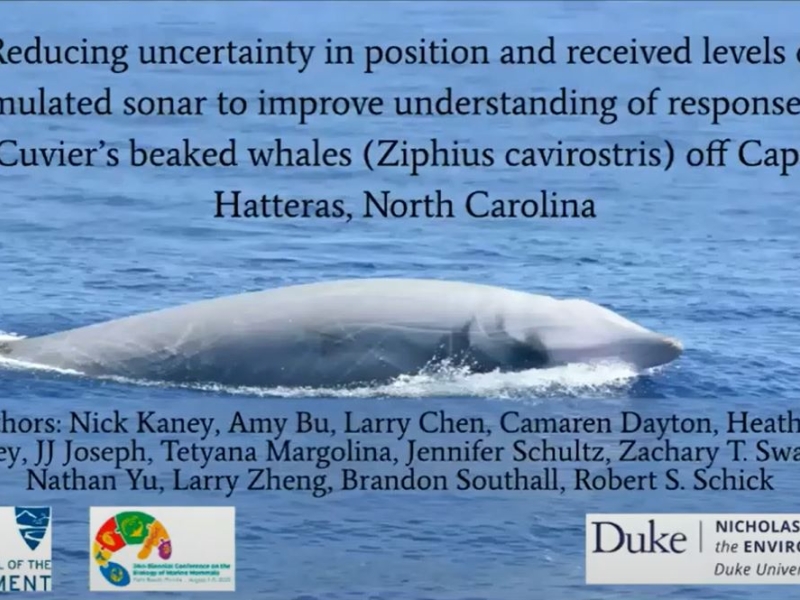
Atlantic Behavioral Response Study
Project Objectives
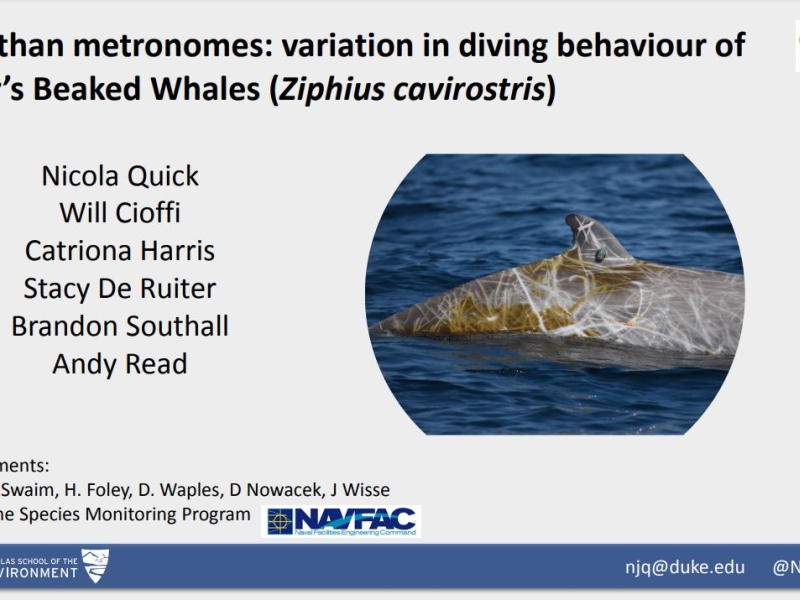
Assess behavioral response of beaked and pilot whales to mid-frequency tactical sonar
Complete
Atlantic Marine Assessment Program for Protected Species (AMAPPS)
Project Objectives
Assess the abundance, distribution, ecology, and behavior of marine mammals, sea turtles, and seabirds in U.S. Atlantic EEZ
Current
Behavioral Response Analysis of Two Populations of Short-Finned Pilot Whales to Mid-Frequency Active Sonar
Project Objectives
Utilize newly developed statistical methods from the Atlantic BRS project and apply them to all the satellite-tagged pilot whales from both the Atlantic and Pacific studies.
Complete
Behavioral Response of Humpback Whales to Vessel Traffic
Project Objectives
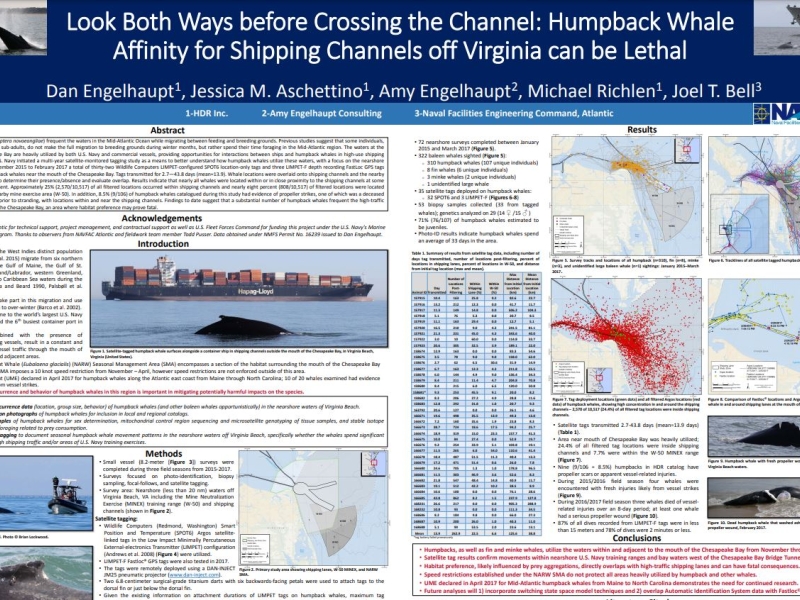
Understand the behavioral response of humpback whales to approaching vessels in the shipping channels at the mouth of the Chesapeake Bay.
Complete
Behavioral Response Research Evaluation Workshop II (BRREW II)
Project Objectives
Response
Complete
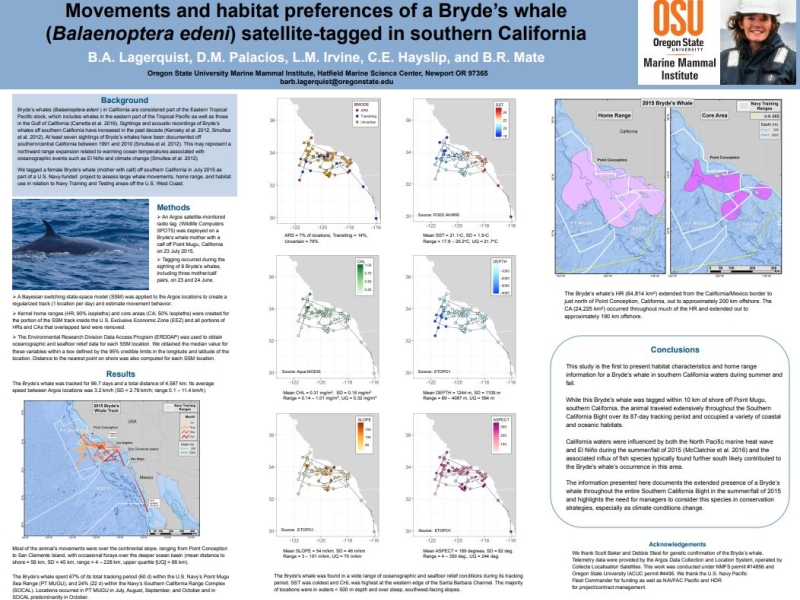
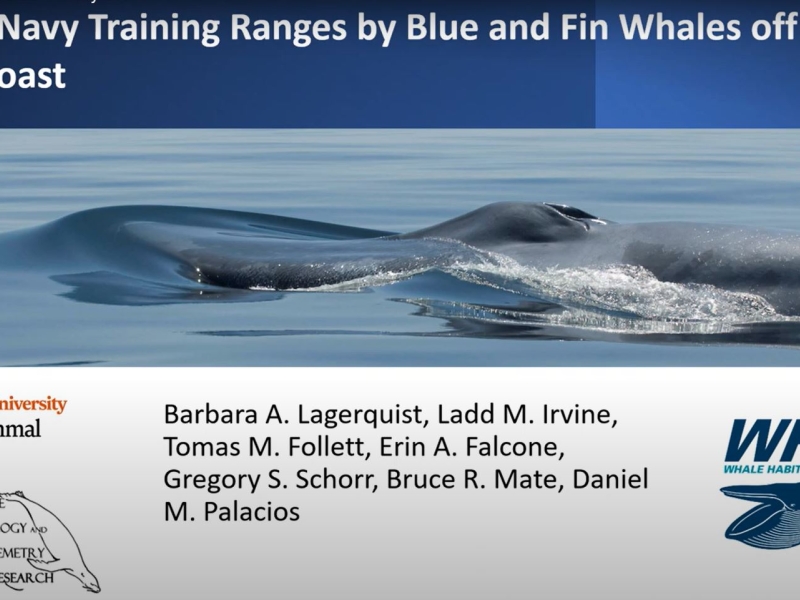
Blue and Fin Whale Satellite Tagging
Project Objectives
Determine the movement patterns, occurrence, and residence times of blue whales and fin whales within U.S. Navy training and testing areas as well as Biologically Important Areas along the U.S. West Coast
Complete
Characterizing the Distribution of ESA-listed Salmonids in Washington and Alaska
Project Objectives
Use acoustic tagging technology to provide critical information on spatial and temporal distribution of salmonids to inform salmon management, U.S. Navy activity, and Southern Resident Killer Whale (SRKW) conservation. The study seeks to 1) determine the occurrence and timing of salmonids within the Navy training ranges, 2) describe the influence of environmental covariates on salmonid occurrence; and, 3) describe the occurrence of salmonids in relation to SRKW distribution.
Current
Distribution of Gulf Sturgeon in the Panama City Testing Range
Project Objectives
Assess Gulf Sturgeon distribution and habitat use through a multi-phase biotelemetry approach
Current
Estimation of Received Levels of MFAS and Behavioral Response of Marine Mammals at PMRF
Project Objectives
Further our understanding of the Monitoring Questions: 1) What is the occurrence and estimated received levels of MFAS on 'blackfish', humpback, minke, sperm and Blainville's beaked whales within the PMRF instrumented range? and 2) What, if any, are the short term behavioral responses of 'blackfish,' humpback, minke, sperm and Blainville's beaked whales when exposed to MFAS/explosions at different levels/conditions at PMRF?
Current
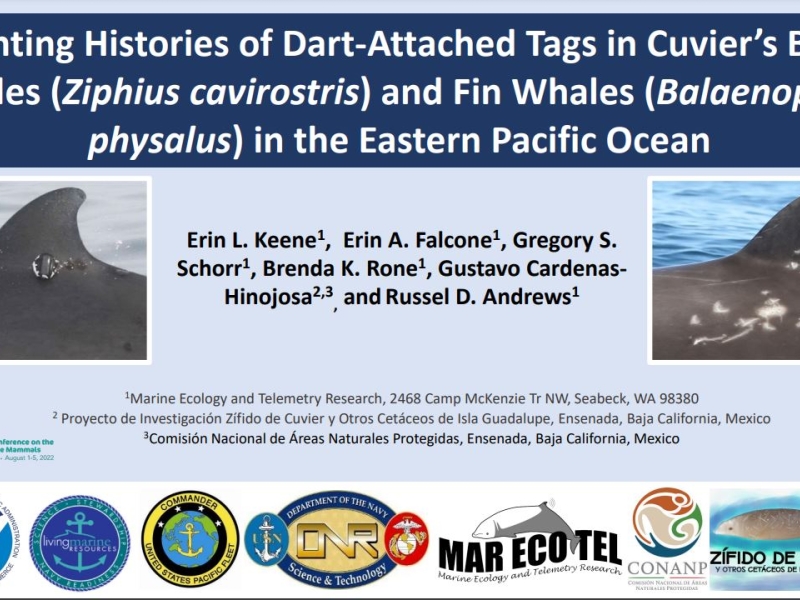
Goose-Beaked Whale and Fin Whale Population Dynamics and Impact Assessment at the Southern California Offshore Antisubmarine Warfare Range (SOAR)
Project Objectives
Improve knowledge of baseline population demographics, vital rates, and movement patterns of Cuvier’s beaked whales and fin whales. Examine what, if any, short term behavioral and/or vocal responses occur when exposed to sonar or explosions at different levels and conditions. Determine if exposure to sonar or explosives impact the long term fitness and survival of individuals or the population, species, or stock
Current
Green and Kemp's Ridley Turtle Tagging for Availability Bias Estimates
Project Objectives
Assess availability bias and habitat associations of endangered Kemp’s ridley and threatened green sea turtles to improve spatial density models
Complete
Guadalupe Fur Seal Satellite Tracking
Project Objectives
Determine the at-sea distribution of endangered Guadalupe fur seals and whether they travel through or utilize the offshore waters of the Southern California Range Complex and Northwest Training and Testing area
Current
Gulf of Alaska Acoustic Moorings and Analysis
Project Objectives
Conduct systematic line transect survey for marine mammals for density estimates; conduct survey to determine ecotype identity of killer whales; analyze existing and newly collected data for seasonal occurrence, abundance, and density of cetacean
Complete
Hawaiian Monk Seal Tagging
Project Objectives
Investigate potential impacts of naval activities on Hawaiian monk seals
Current
Jacksonville Shallow Water Training Range Vessel Surveys and M3R Species Verifications
Project Objectives
Monitor species composition and distribution on JSWTR, support M3R species verifications
Complete
Lower Chesapeake Bay Sea Turtle Tagging and Tracking
Project Objectives
Assess ocurrence and behavior of loggerhead, green, and Kemp's ridley sea turtles in the Hampton Roads region of Chesapeake Bay and coastal Atlantic Ocean
Complete
Mid-Atlantic Humpback Whale Monitoring
Project Objectives
Assess occurrence, habitat use, and baseline behavior of humpback whales in the mid-Atlantic region
Current
Mid-Atlantic Nearshore & Mid-shelf Baleen Whale Monitoring
Project Objectives
Assess occurrence, habitat use, and baseline behavior of baleen whales in the mid-Atlantic region
Current
Mid-Atlantic Offshore Cetacean Study
Project Objectives
Assess occurrence, habitat use, and baseline behavior of cetaceans in the offshore and continental shelf break region of the VACAPES OPAREA
Current
Monitoring Cetaceans in Hood Canal
Project Objectives
This 12‑month integrated pilot project combines three complementary components: (A) shore‑based theodolite monitoring of harbor porpoises, (B) high‑bandwidth passive acoustic monitoring and soundscape characterization, and (C) suction‑cup multi‑sensor tag deployments on Bigg’s (transient) killer whales. Together, these data streams will quantify occurrence, movement, diving, and behavioral context for these two key species in relation to the local soundscape—including operational signals near the Dabob Bay Range Complex (DBRC) and the Bangor Trident Base. Results can provide an empirical foundation and inform the study design of future cetacean behavioral response studies (BRS) in Hood Canal.
Complete
North Atlantic Right Whale Monitoring in the Southeast Calving Area
Project Objectives
Assess behavior of right whales in coastal waters of the Southeast calving grounds, including rates of travel of individuals, dive behavior, and rates of sound production
Current
North Atlantic Right Whale Monitoring, Conservation, and Protection
Project Objectives
Assess occurrence, habitat use, and behavior of North Atlantic right whales in the mid-Atlantic region
Complete
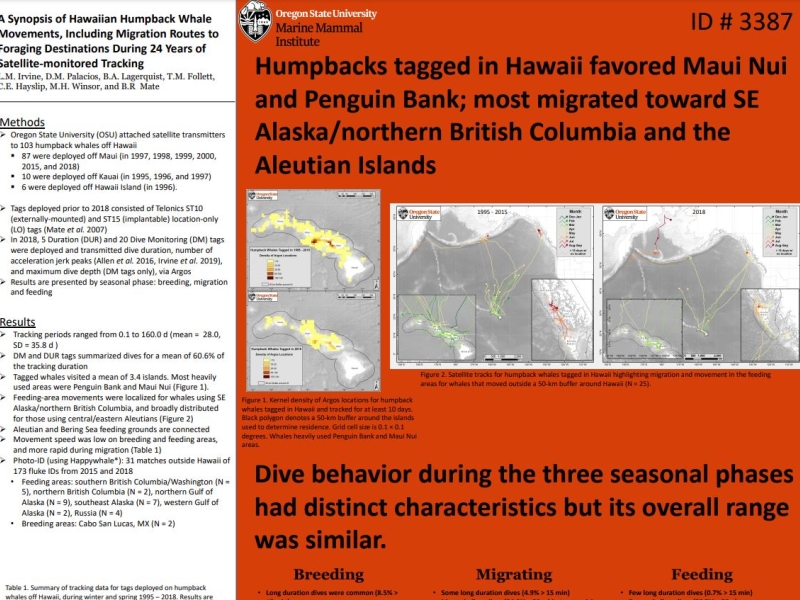
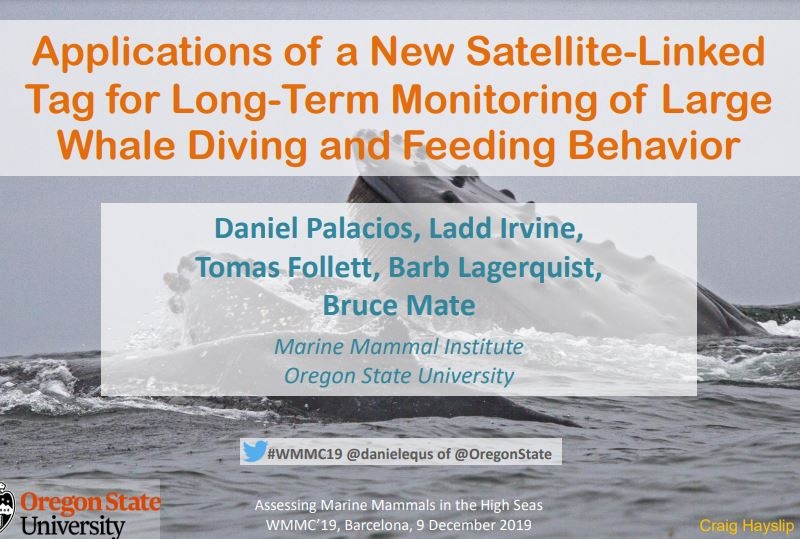
North Pacific Humpback Whale Tagging
Project Objectives
Determine the occurrence, movement patterns, and residency patterns of multiple humpback whale Distinct Population Segments within Pacific Ocean Navy Range Complexes
Complete
Occurrence of Green Sturgeon in Inland Waters (historical tag analysis)
Project Objectives
Compile green sturgeon tag and receiver data and analyze historical data for occurrence, distribution, and seasonality in Puget Sound and the Straits of Juan de Fuca
Complete
Occurrence, Ecology, and Behavior of Deep-diving Odontocetes
Project Objectives
Establish behavioral baseline and foraging ecology. Assess behavioral response to acoustic stimuli and Navy training activities
Complete
Offshore Distribution of Southern Resident Killer Whales in the Pacific Northwest
Project Objectives
1) Identify and classify Southern Resident killer whale (SRKW) detections from acoustic recorders and satellite tag tracking; 2) Develop a model to estimate the seasonal and annual occurrence patterns of southern resident killer whales relative to offshore Navy training ranges. 3) Characterize occurrence of anthropogenic sounds in potential SRKW habitat. 4) Develop state space habitat model for SRKW prey, based on fall Chinook salmon tagged released from California to British Columbia between 1977 and 1990 to estimate seasonal distribution along the west coast.
Current
Pacific Marine Assessment Program for Protected Species (PACMAPPS) survey
Project Objectives
Identify species of beaked whales, odontocetes, and baleen whales that occur in the surveyed areas; Monitor marine mammal and sea turtle presence, distribution, and diversity in offshore waters; Develop a better understanding of marine mammal distribution, movement patterns, habitat use, population structure, and abundance; Develop reference library of visually-validated acoustic recordings of marine mammals.
Current
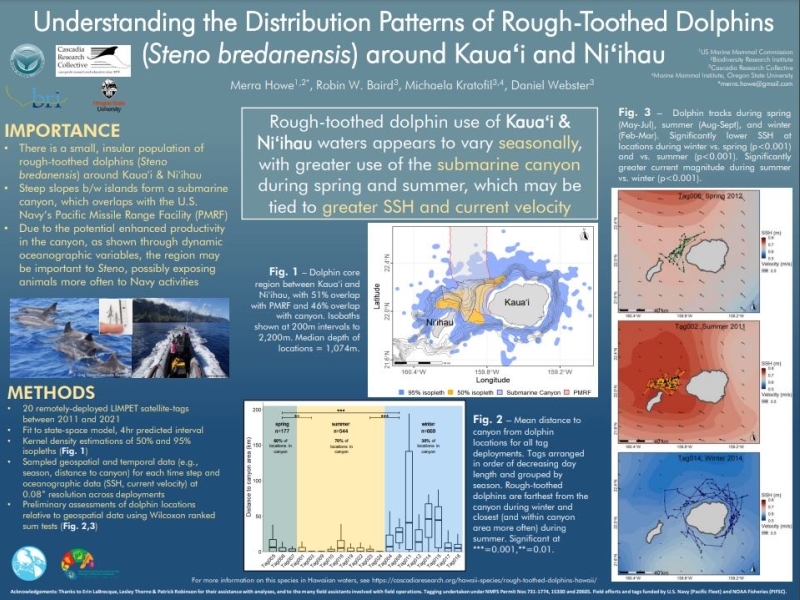
Pilot Project to Assess Feasibility of Multi-Sensor Tagging of Rough-Toothed Dolphins at the Pacific Missile Range Facility (PMRF)
Project Objectives
Determine feasibility and efficacy of deploying high resolution multi-sensor tags on rough-toothed dolphins at PMRF and determine how collected data can be used to move toward a better understanding of the effects of Navy activities, ultimately leading to PCoD modelling.
Complete
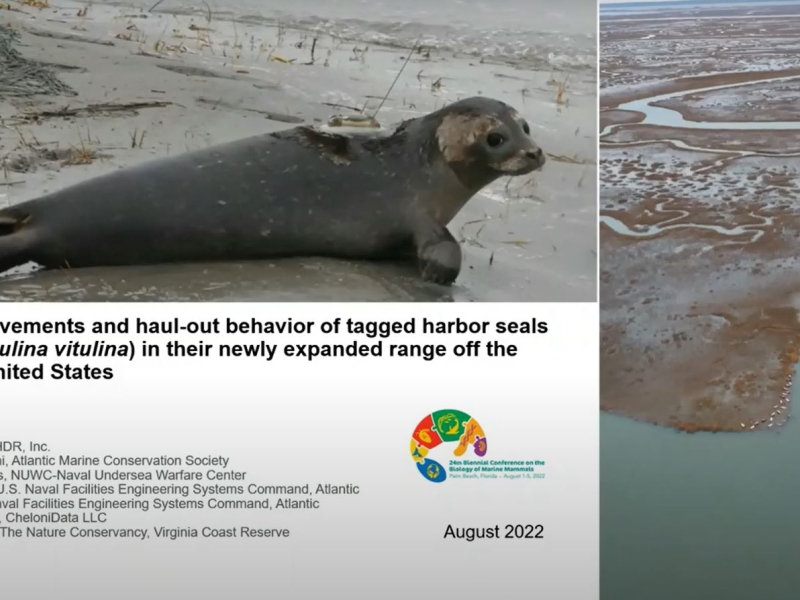
Pinniped Monitoring in the Northeast
Project Objectives
Document habitat use, haul-out patterns, and baseline behavior of seals
Complete
Pinniped Tagging and Tracking in Southeast Virginia
Project Objectives
Document habitat use, movement and haul-out patterns of seals in the Hampton Roads region of Chesapeake Bay and coastal Atlantic Ocean
Current
Salmonid and Southern Resident Killer Whale Distribution in the Pacific Northwest
Project Objectives
1) Determine the occurrence of bull trout within and near the boundaries of the NWTT; 2) Determine the spatiotemporal occurrence of killer whale and baleen whale in the NWTT; 3) Characterize the occurrence of endangered fish species within the NWTT
Complete
Satellite Tagging and Behavioral Monitoring of Male California Sea Lions in the Pacific Northwest to Assess Haul-out Behavior on Puget Sound Navy Facilities and Foraging Behavior in Marine Navy Testing and Training Areas
Project Objectives
To determine the abundance and habitat use of California sea lions that haul out at Navy facilities and forage in testing and training areas
Complete
Sea turtle tagging in the Mariana Islands Range Complex
Project Objectives
Develop a better understanding of sea turtle distribution and habitat use in the Mariana Islands, particularly in relation to locations used by the Navy for underwater detonation training
Complete
Small vessel visual surveys in the Mariana Islands Range Complex
Project Objectives
Identify species of beaked whales, odontocetes, and baleen whales that occur in the Mariana Islands; Monitor marine mammal and sea turtle presence, distribution, and diversity in nearshore waters during key seasons (summer and winter); Develop a better understanding of marine mammal distribution, movement patterns, habitat use, population structure, and abundance; Develop reference library of visually-validated acoustic recordings of marine mammals.
Current
Telemetry and Genetic Identity of Chinook Salmon in Alaska
Project Objectives
To use a combination of pop-up satellite technology and salmon genetics to provide critical information on Chinook salmon spatial and temporal distribution in the Gulf of Alaska and along the Washington coast to inform salmon management and U.S. Navy training activities. The study seeks to 1) determine the occurrence, timing, and specific run of Chinook salmon through genetics within the Navy training areas; 2) describe the influence of environmental covariates on Chinook salmon occurrence; and 3) improve the understanding of run-specific timing and geographical occurrence of Chinook salmon as the prey of Southern Resident killer whales in Washington.
Current
Visual Survey and Tagging of Hawaiian Odontocetes
Project Objectives
(1) define the spatial movement and habitat use patterns of species that are exposed to mid-frequency active (MFA) sonar (2) determine how these patterns influence exposure and potential responses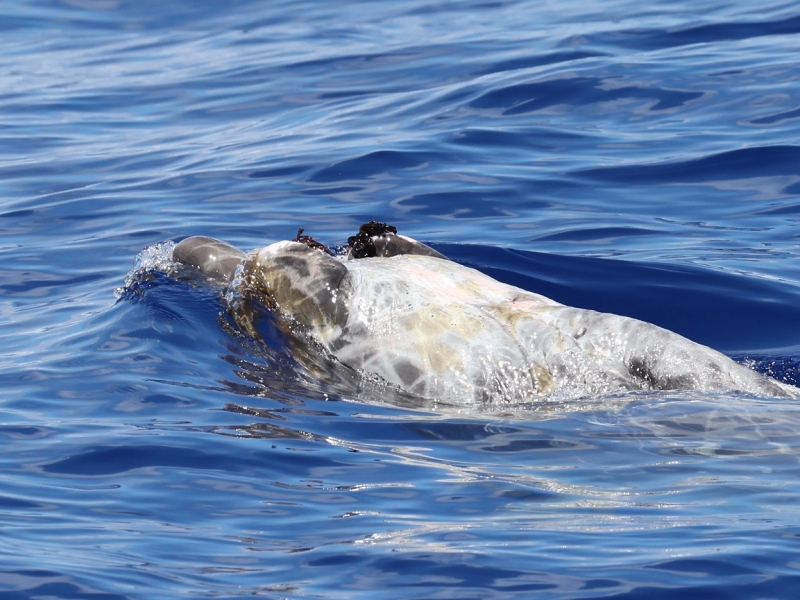
Kaua‘i field project - August 2026
August 25, 2026
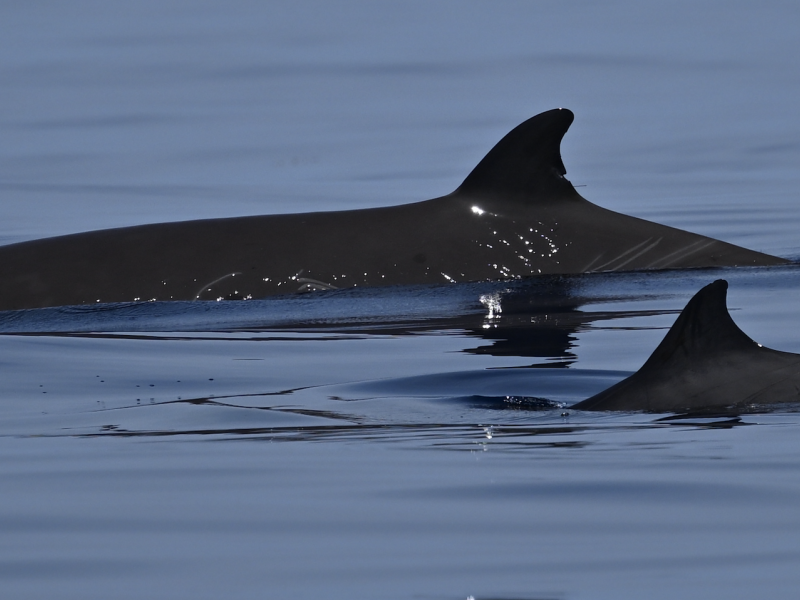
Researchers from Cascadia Research Collective are conducting a 9-day field session off Kaua'i to deploy LIMPET satellite tags on odontocete cetaceans prior to a Submarine Command Course (SCC) to be able to examine their behavior before, during, and after the training event. Click on the image below to see daily updates from the field.
Another CEE Trial – and Gervais’ beaked whales!
August 10, 2026
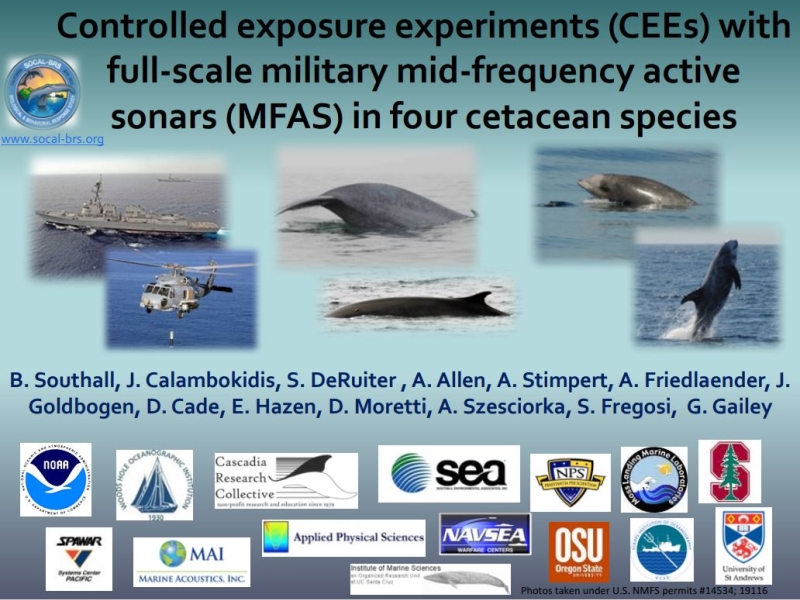
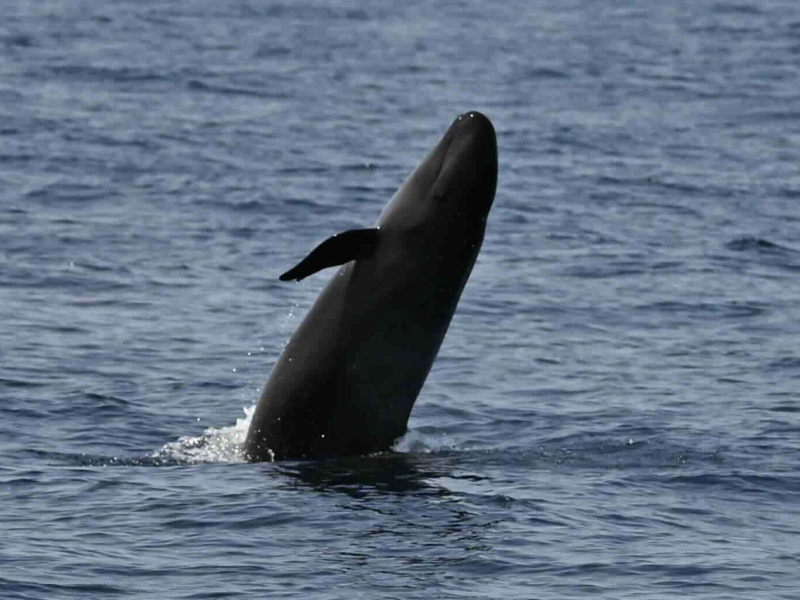
A second controlled exposure experiment trial with simulated Continuously Active Sonar (CAS) was conducted on August 1. In addition to the usual goose-beaked whales, we also had a sighting of less common Gervais' beaked whales.
Killer Whale Ecotype Study (KWEST) kicks off
July 27, 2026
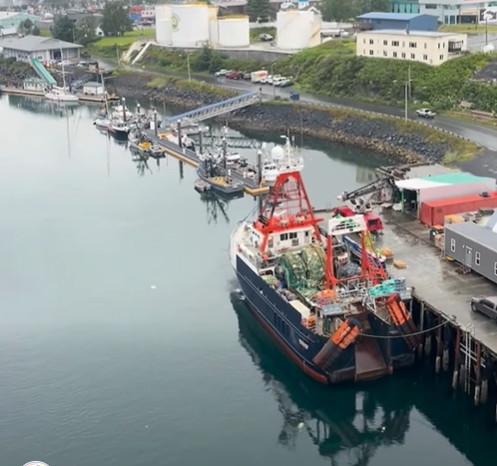
Research scientists from the University of Washington and NOAA recently departed from Kodiak, AK aboard the R/V Aquila for a 2-month research cruise focused on distinct groups of killer whales, or ecotypes, that hunt different prey and travel in different parts of the Gulf of Alaska.
First CEE Trial of 2026 – and False Killer Whales
July 23, 2026
The Atlantic BRS team had an extremely productive day on Friday, July 17th with tags deployed on both false killer whales and goose-beaked whales, as well as a successful controlled exposure experiment with simulated Continuous Active Sonar signals.
Kemp’s ridley / Loggerhead Hybrid Turtle Tagged at Jekyll Island
June 15, 2026
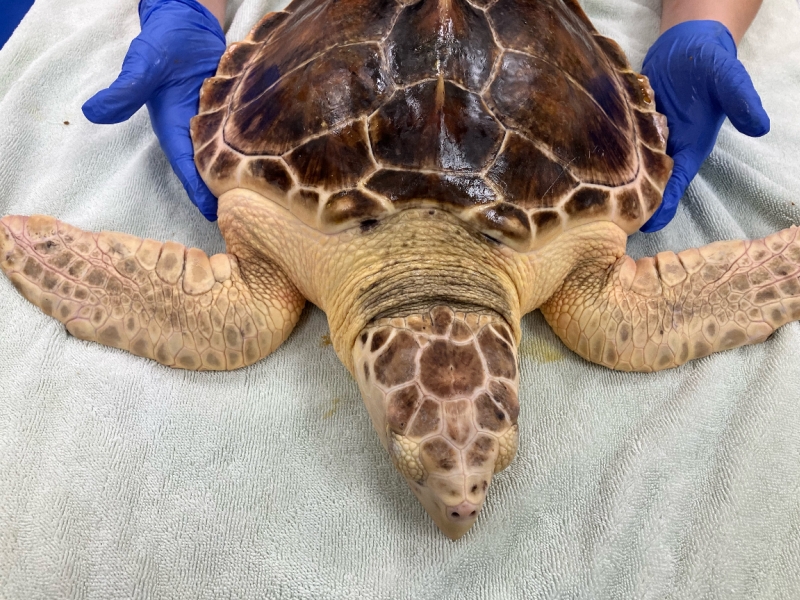
Researchers were surprised by an unusual turtle that stranded in Georgia-- a Kemp’s ridley / Loggerhead Hybrid Turtle, and were able to tag the animal for release.
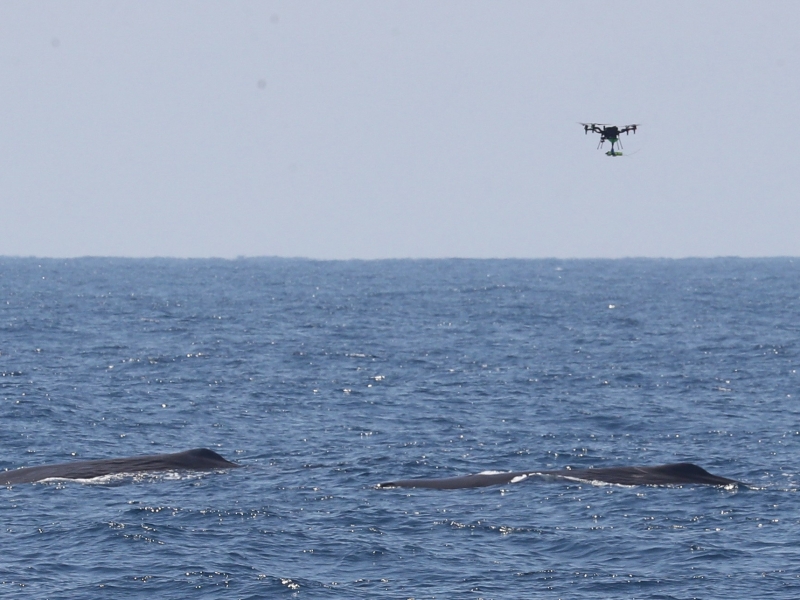
A Macrocephalus Mother's Day Tradition
May 27, 2026
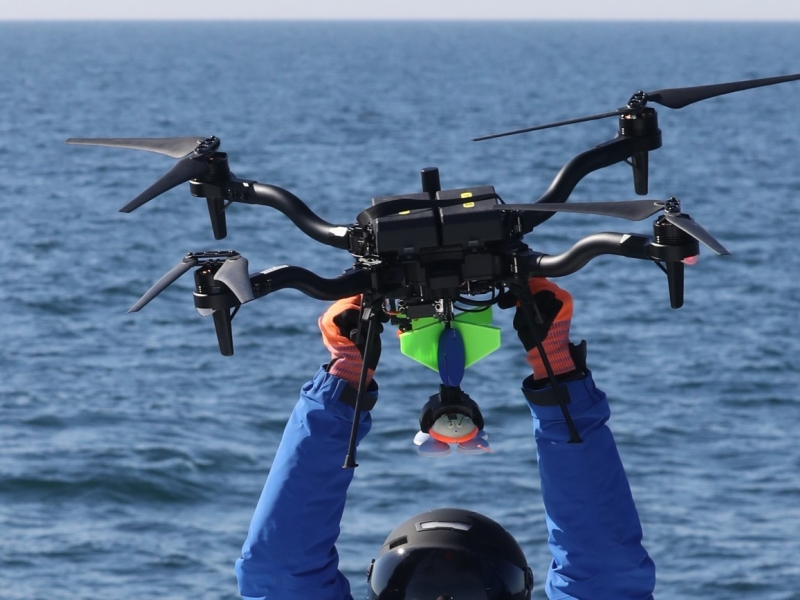
HDR-lead team encountered a group of mainly female sperm whales with calves on Mother's Day for the 2nd year in a row, and successfully deployed a tag from a drone. We believe it's the first CATS tag deployed on a sperm whale via drone.
First Tagged Sea Turtle Released from Jekyll Island, Georgia
October 17, 2025
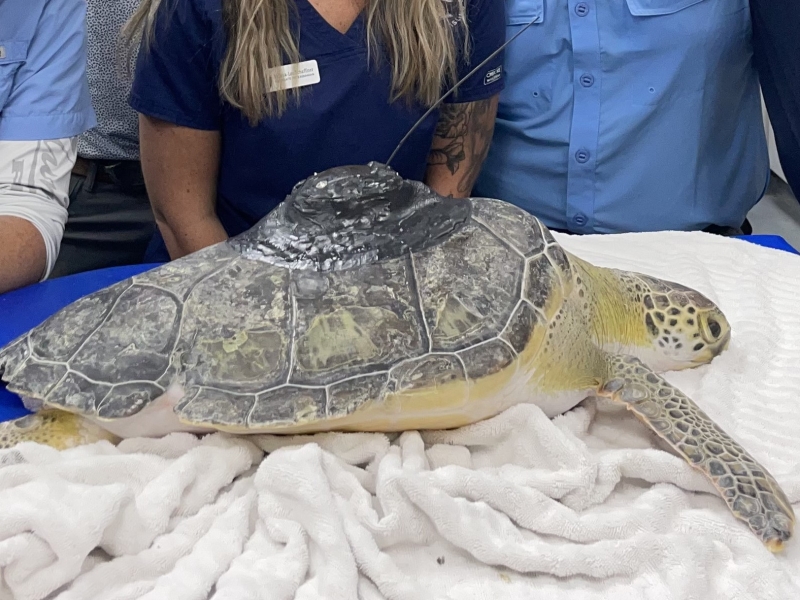
Collaborators at the Jekyll Island Authority in Georgia have released the first satellite-tagged green turtle in Georgia waters under the Navy’s “Green and Kemp's Ridley Turtle Tagging for Availability Bias Estimates” Project.
Controlled Exposure Experiment Trial with Simulated CAS Signals
October 1, 2025
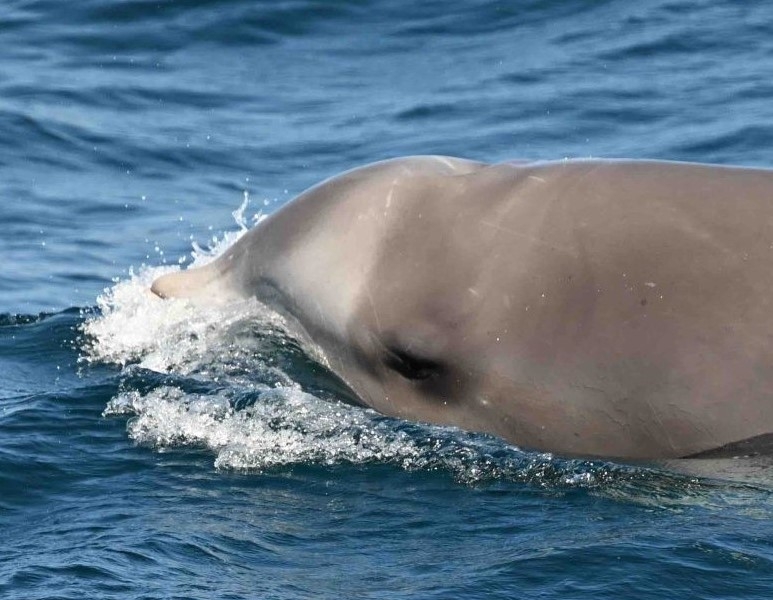
On Friday, September 19th, the project team led by Duke University and Southall Environmental Associates conducted a Controlled Exposure Experiment (CEE) trial with goose-beaked whales Ziphius cavirostris in our study area off Cape Hatteras. They generated simulated Continuous Active Sonar (CAS) signals with a brand-new sound source built specifically for this purpose.
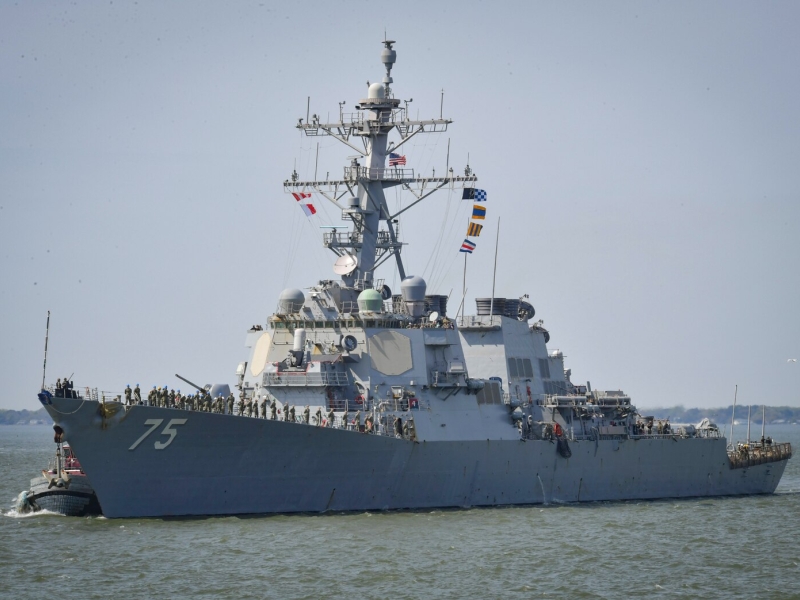
Atlantic BRS - successful CEE trial with the USS Donald Cook
July 22, 2025
The Atlantic BRS team just completed a successful controlled exposure experiment with the Arleigh Burke-class guided-missile destroyer USS Donald Cook (DDG 75) involving eight satellite-tagged beaked whales off Cape Hatteras.
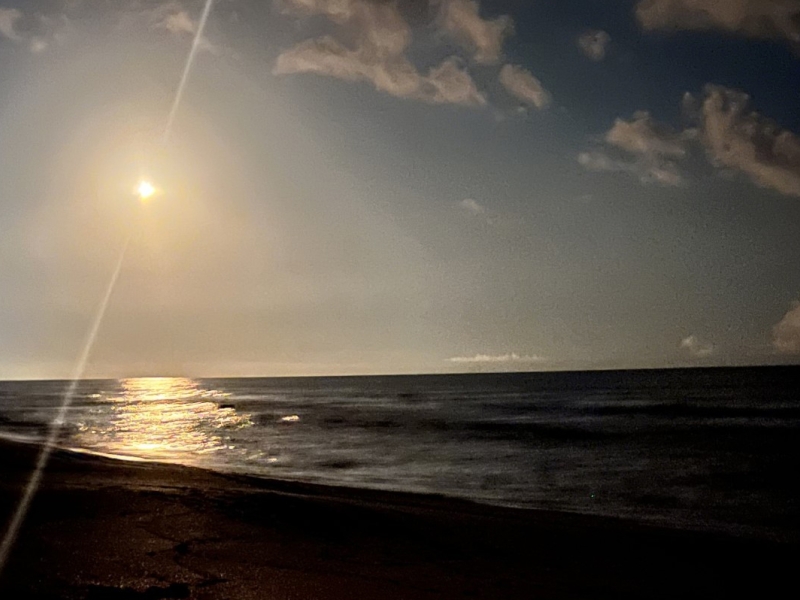
Green turtles are back on the Space Coast
July 21, 2025
A field team led by co-Principle Investigator Dr. Kate Mansfield of the Marine Turtle Research Group at the University of Central Florida kicked off the second year of tagging for our “Kemp’s Ridley and Green Sea Turtle Tagging for Availability Bias Analysis” project.
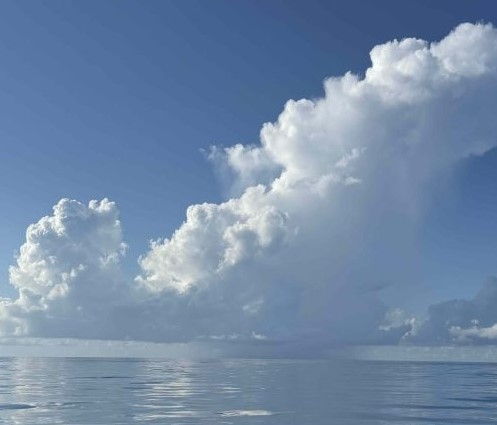
Atlantic BRS - field work update
July 16, 2025
You never know what you will see offshore, and this weekend was no exception.
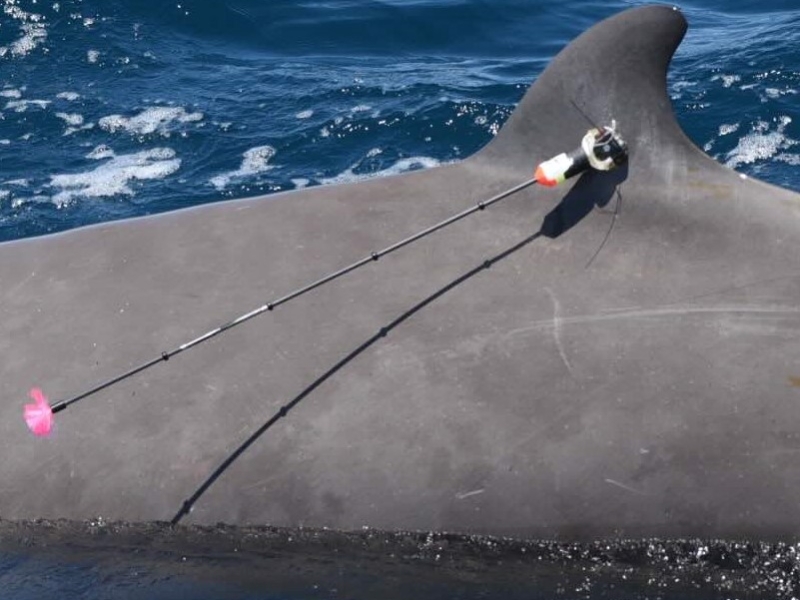
Atlantic BRS 2025 - Old Friends & Baby Beaked Whales
June 26, 2025
Field work recently kicked off for the Atlantic BRS project field season and we're happy to say that things appear much more "normal" compared to 2024 when Ziphius were relatively scarce at the Hatteras study site.
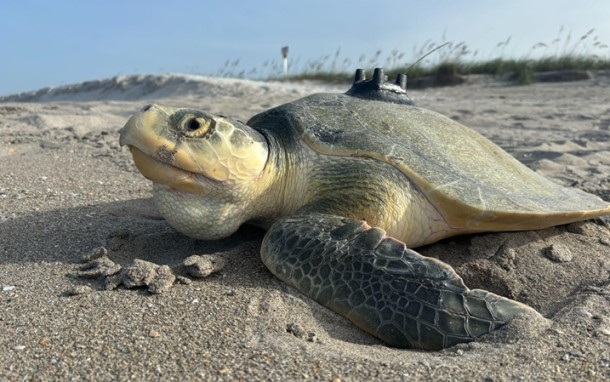
Kemp's on the move!
May 19, 2025
Five Kemp’s ridley turtles satellite tagged on the east coast of Florida have moved out of Florida waters.
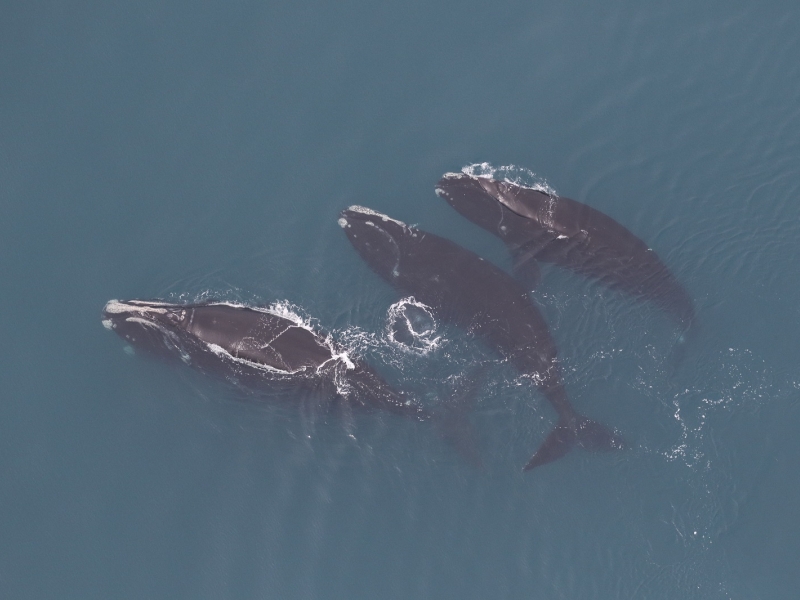
2024-2025 Large Whale Season Summary
March 24, 2025
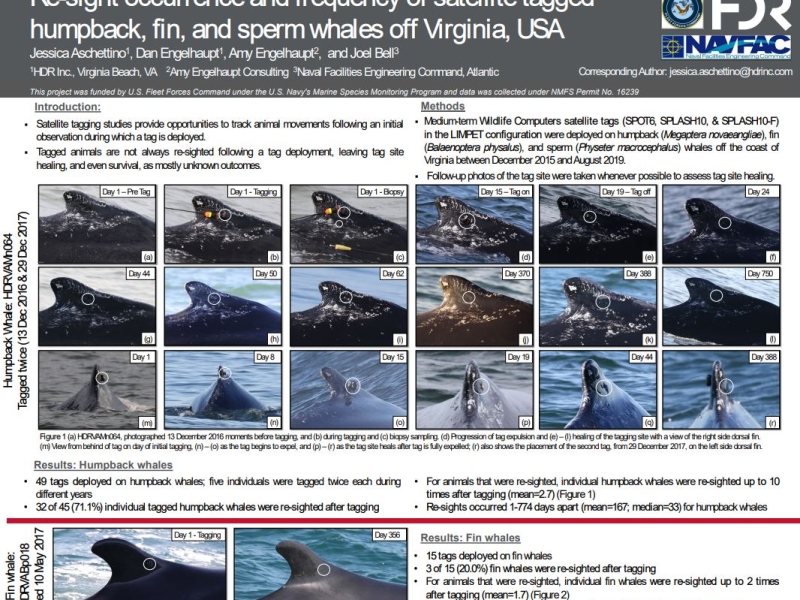
We have two separate efforts focusing on cetaceans off the coast of Virginia. The first is our Offshore (Outer Continental Shelf) Cetacean Study, which focuses primarily on deep diving odontocetes like sperm whales. The second effort is our Nearshore and Mid-Shelf Baleen Whale Monitoring Project.
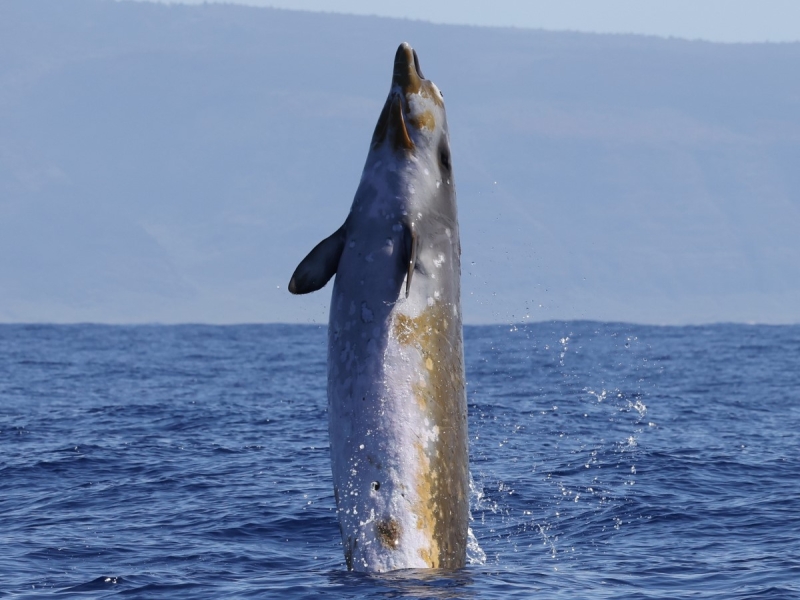
Kaua'i Field Work Updates
February 20, 2025
Scientists from Cascadia Research Collective recently completed a ~9-day field project off Kaua’i that started on February 9th. This project is timed to occur prior to a Submarine Command Course (SCC) training event. The primary goal is to deploy satellite telemetry tags on multiple species of odontocete cetaceans prior to the SCC, to be able to examine their behavior before, during, and after the event. This approach has been very successful in the past as a way of examining how different species respond to Navy training activities including mid-frequency active sonar (MFAS). Click through the picture below to see daily updates.
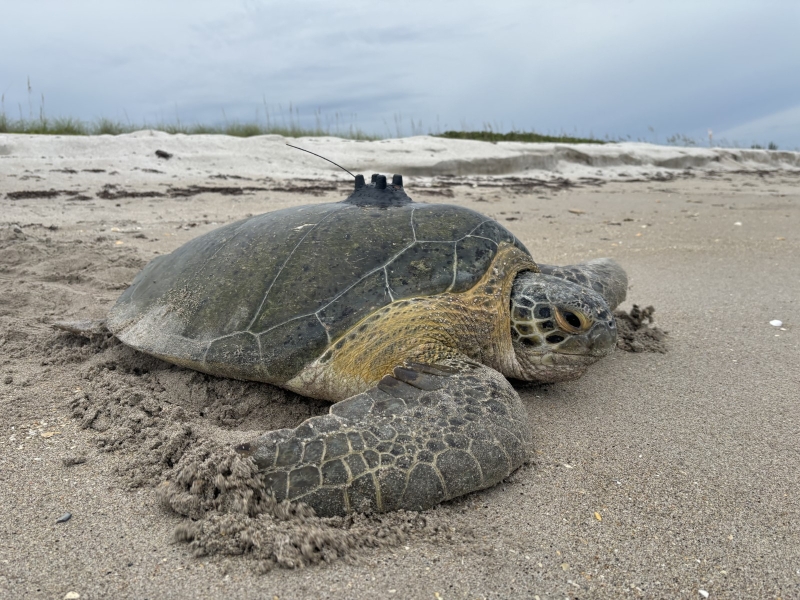
Males have joined the turtle tagging party
July 15, 2024
Researchers from Inwater Research Group (IRG), supported by Dr. Kate Mansfield of the UCF Marine Turtle Research Group and Andrew DiMatteo of CheloniData LLC, have deployed a satellite-linked data logger on an adult male green sea turtle in St. Lucie County, Florida. This initiative aims to study the diving behavior and habitat use of male green turtles along the U.S. east coast.
First Satellite Tag Deployments for Atlantic BRS 2024
July 8, 2024
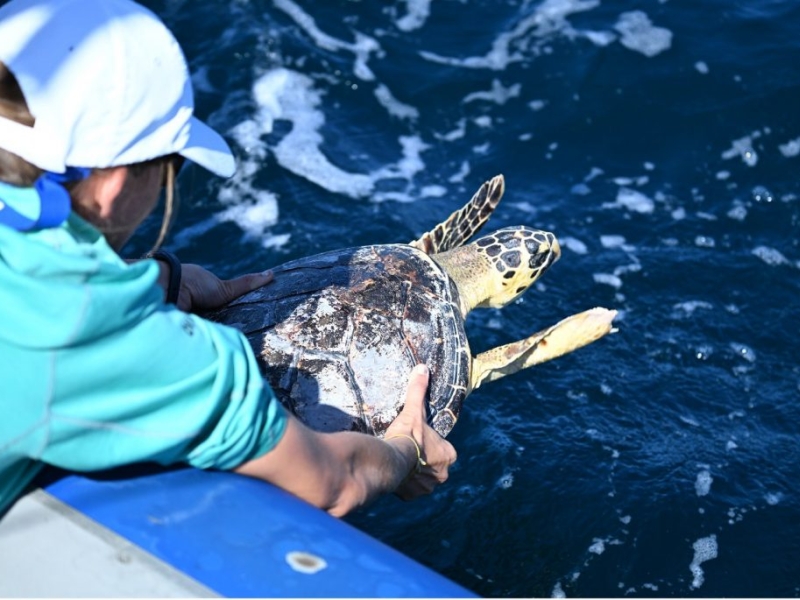
In June 2024, a Duke University team initiated the Atlantic Behavioral Response Study (BRS) by deploying satellite-linked dive recorders on goose-beaked whales (Cuvier's beaked whales) off the coast of North Carolina. These tags collect data on the whales' diving behavior and locations, enhancing understanding of their baseline activities. Additionally, the team released a rehabilitated hawksbill sea turtle named Bagheera back into the Atlantic Ocean.
Back in the turtle tagging business
June 28, 2024
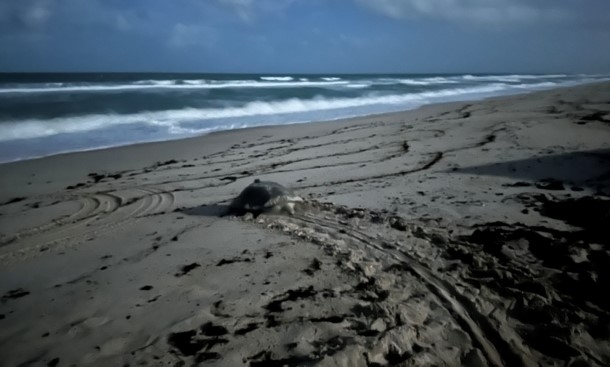
Researchers at the University of Central Florida (UCF), led by Dr. Kate Mansfield and supported by the UCF Marine Turtle Research Group and Andrew DiMatteo of CheloniData LLC, deployed five satellite-linked data loggers on adult nesting green turtles at the Archie Carr National Wildlife Refuge in Florida during the week of June 17th.
Mesoplodon mysterioso
June 13, 2024
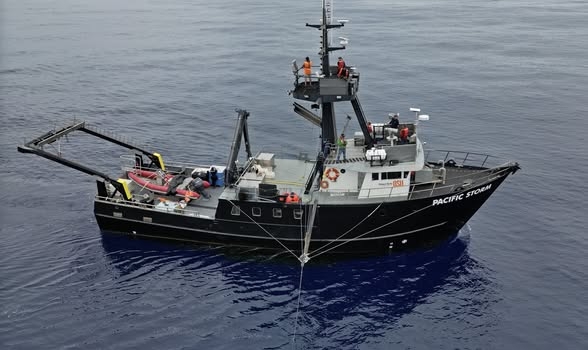
We are thrilled to be part of the "Mystery Mesoplodon Expedition" off the west coast of Baja California searching for an elusive new species of beaked whale. Read about the initial discovery and stay tuned for updates on this exciting expedition!
Kauai' Field Work Updates
February 16, 2024
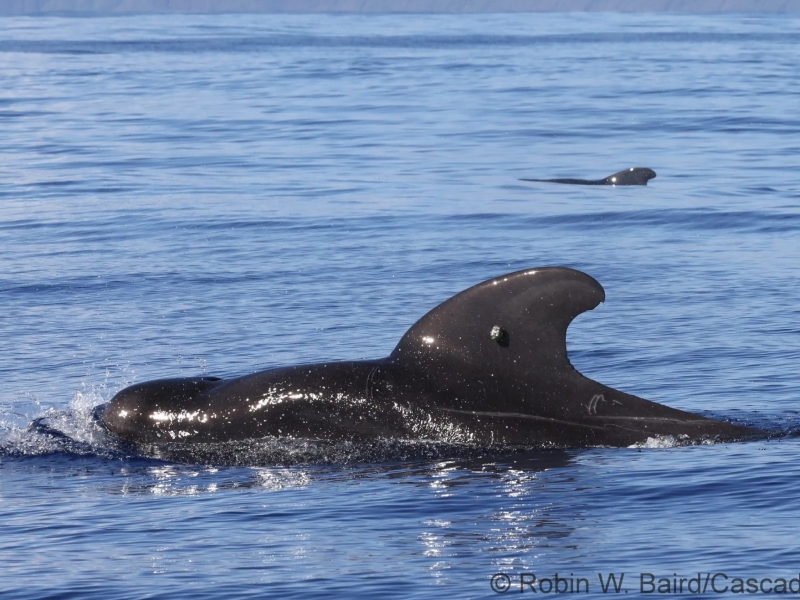
Scientists from Cascadia Research Collective are leading a ~9-day field project off Kaua’i that started on February 11th.
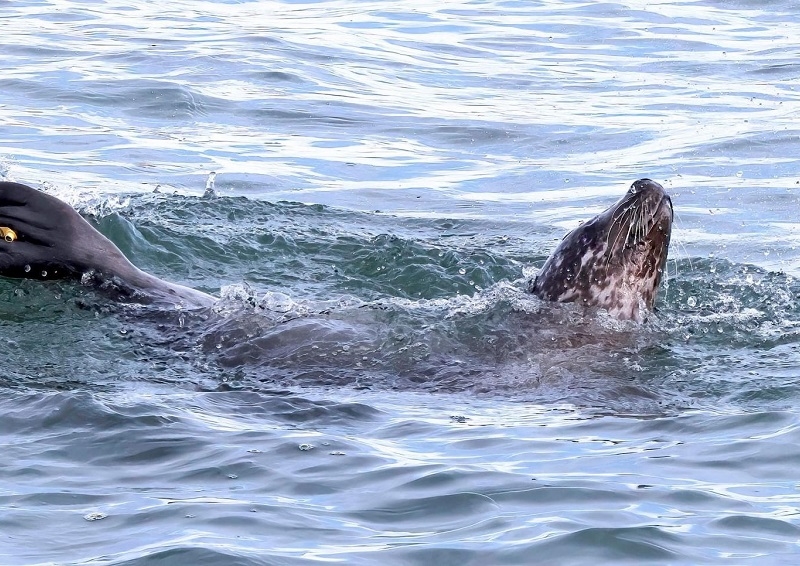
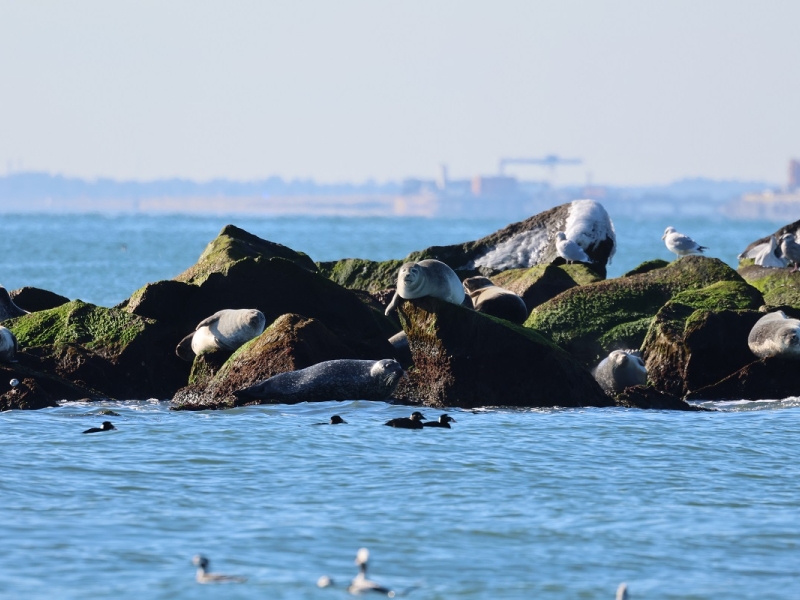
Seal Tagged in 2022 is Back Again!
February 14, 2024
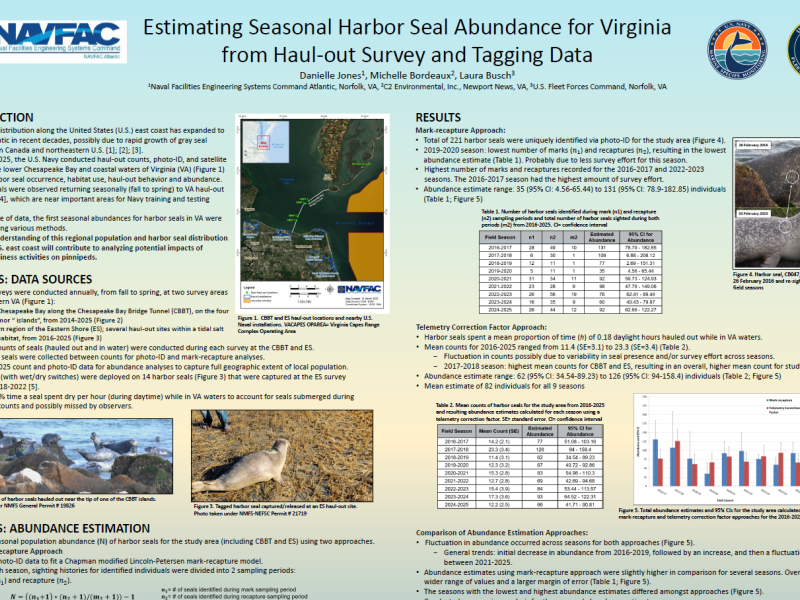
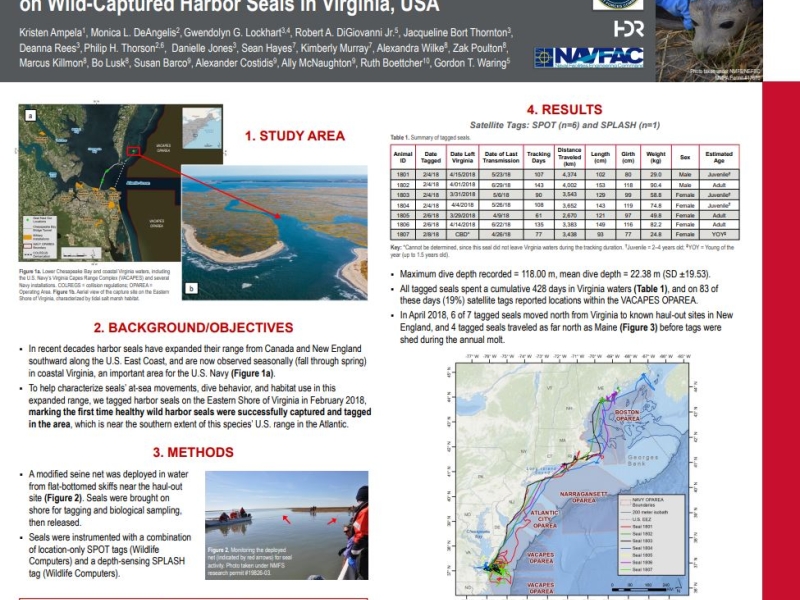
On 10 February 2024, a local wildlife enthusiast, Caroline Prevost, was out on the Chesapeake Bay when she observed some harbor seals enjoying time in the water near island 4 of the Chesapeake Bay Bridge Tunnel.
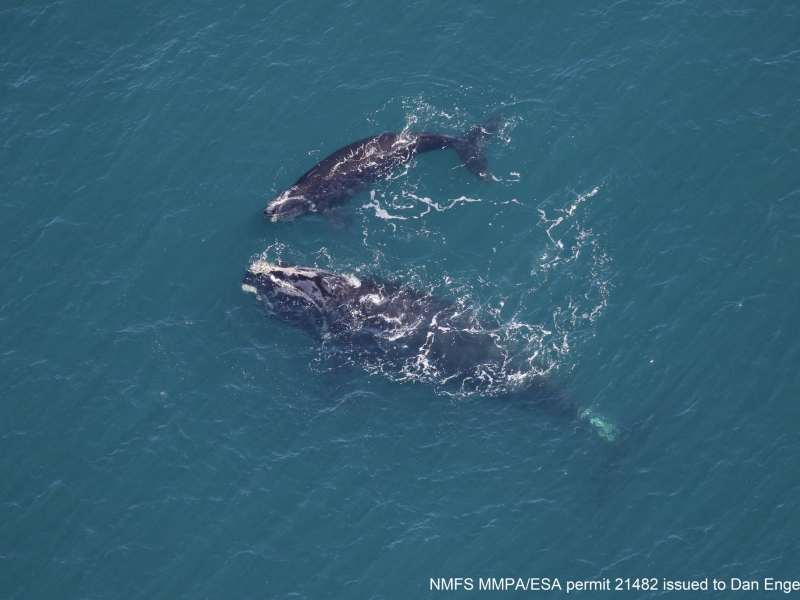
Coming full circle – right whale mom returns with calf
March 15, 2023
Previously CATS tagged Right whale "Smoke" is sighted again in VA with a calf.
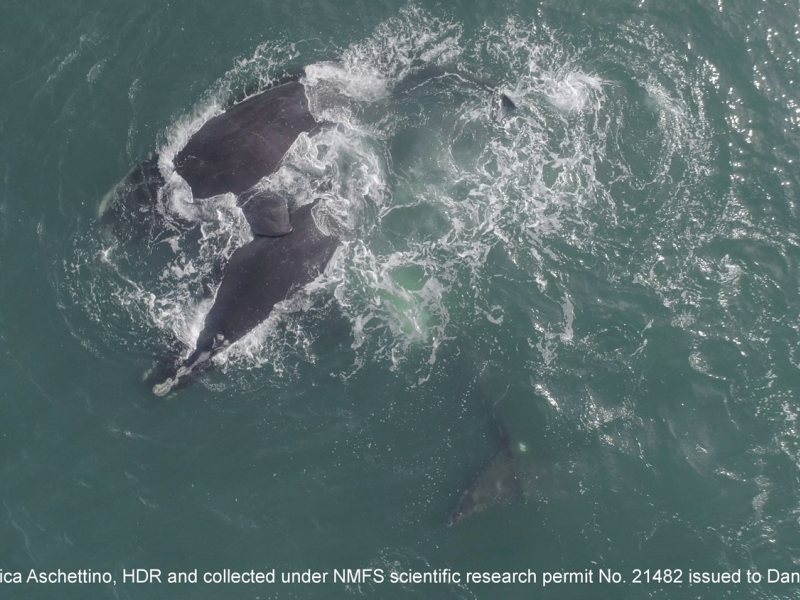
Right Whale Party in the Mid-Atlantic
February 4, 2023
A Surface Active Group of North Atlantic right whales off the coast of Virginia.
Right whales are on the move!
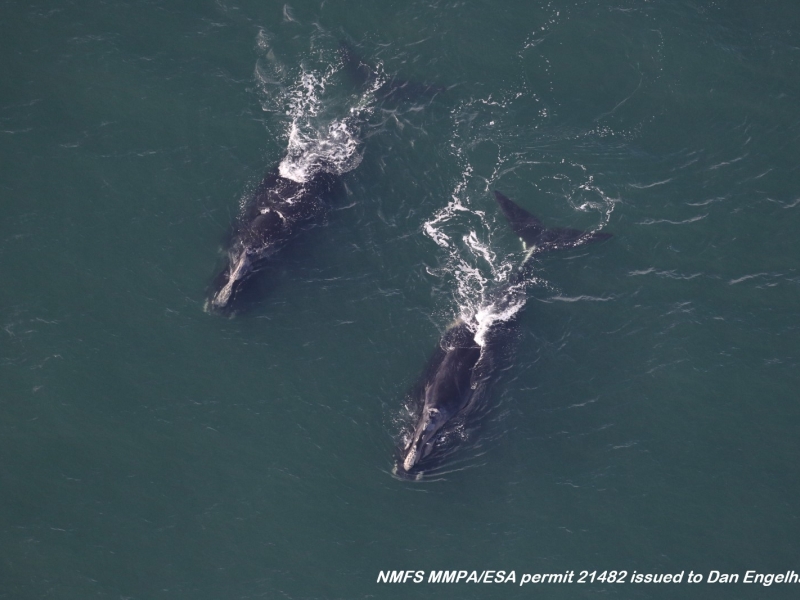
November 23, 2022
Two female right whales were sighted off Virginia during their southbound migration.
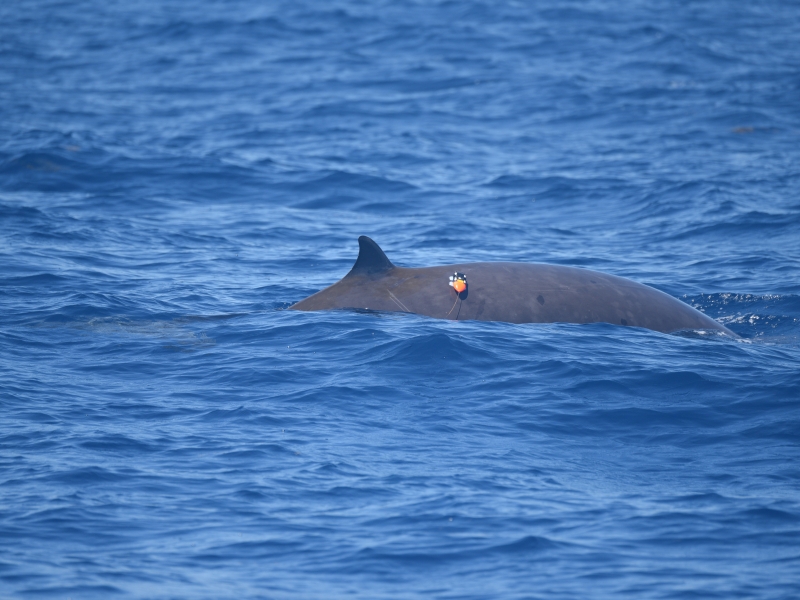
Atlantic BRS – 2022 CEE with the USS Farragut
August 26, 2022
A controlled exposure success story using a Navy ship.
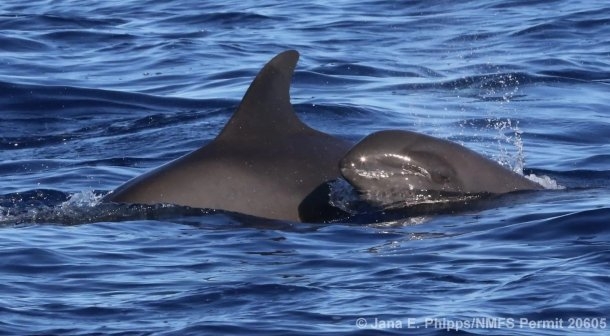
August 2022 Kaua‘i Field Project
August 18, 2022
Cascadia Research Collective began an 8-10 day field project off Kaua’i starting on August 16th. This project is timed to occur prior to a Submarine Command Course (SCC). Their primary goal is to deploy LIMPET satellite tags on one or more species of odontocete cetaceans prior to the SCC, to be able to examine their behavior before, during, and after the SCC. This approach has been very successful in the past as a way of examining how different species respond to Navy training activities including mid-frequency active sonar.
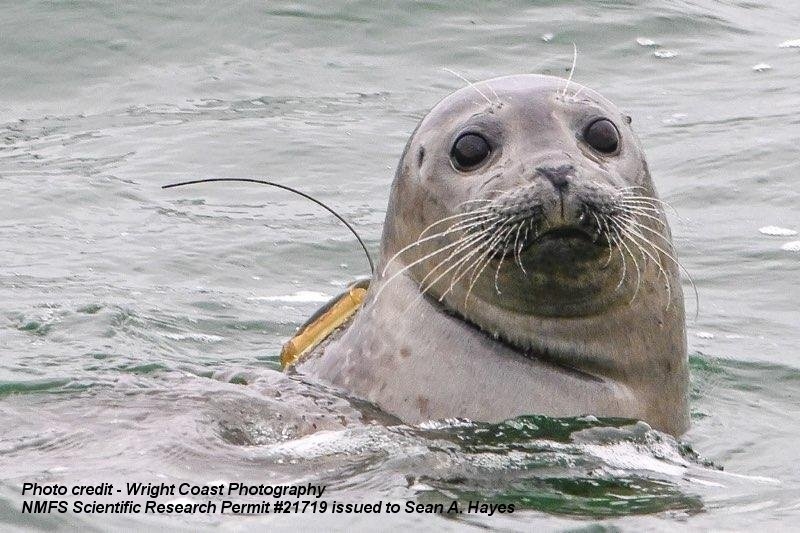
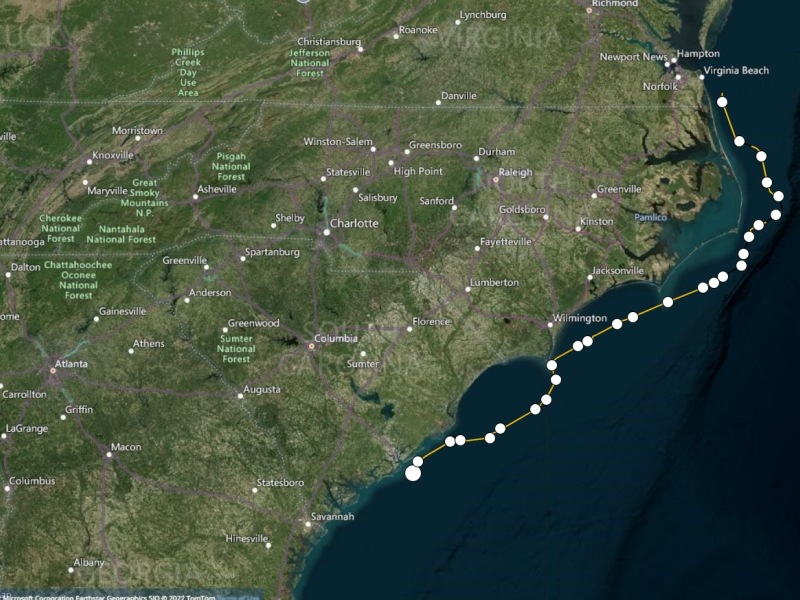
NARW tagged off VA Beach!
March 2, 2022
A yearling right whale was tagged off Virginia.
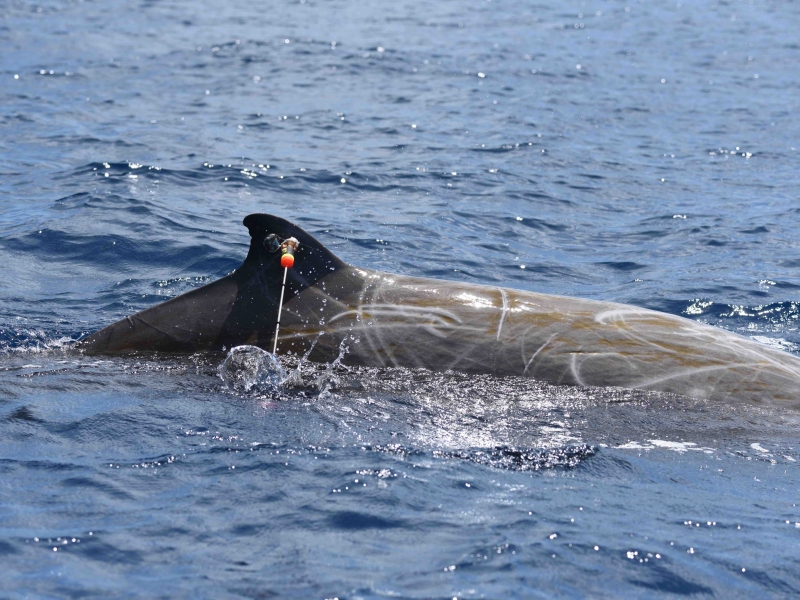
Atlantic Behavioral Response Study kicks off 2021 field season
July 13, 2021
The Atlantic Behavioral Response Study kicked off the 2021 field season last week by deploying the first round of satellite-linked telemetry tags on Cuvier's beaked whales.
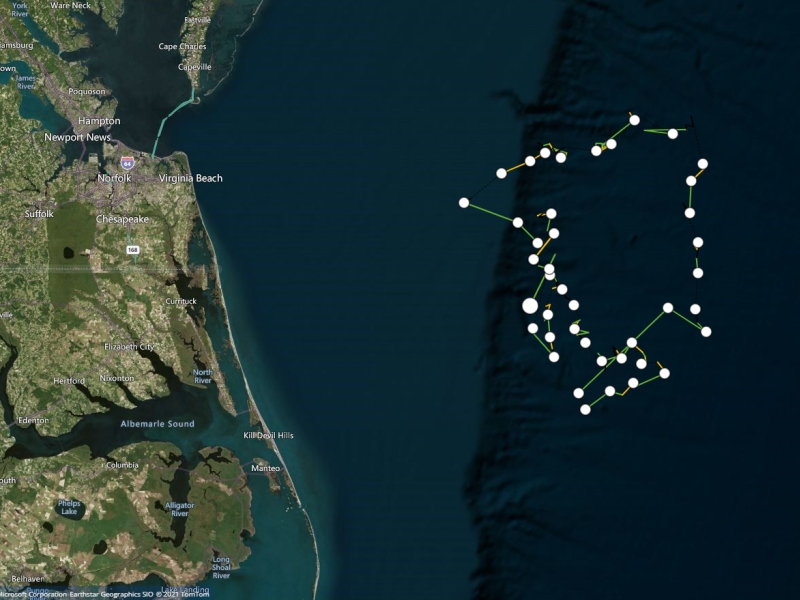
Blue whale tagged off the coast of Virginia
April 26, 2021
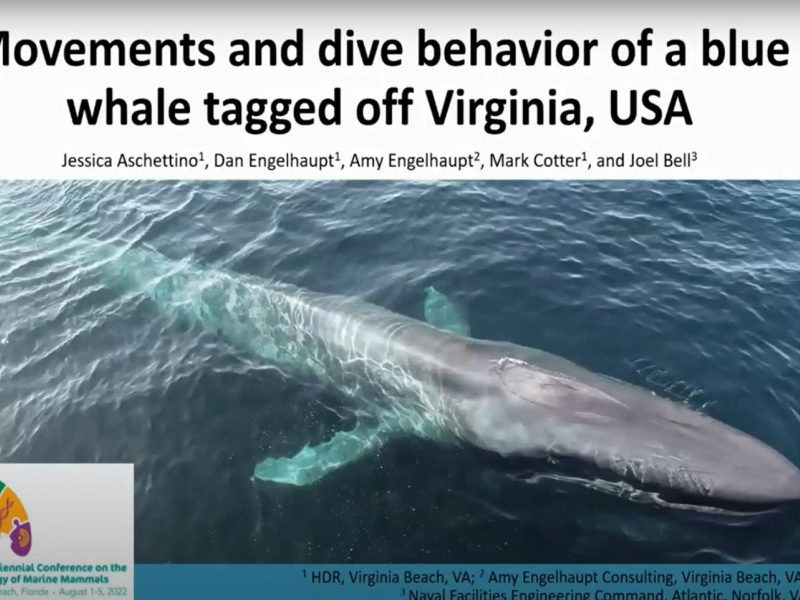
Details on the first blue whale tagged in the region.
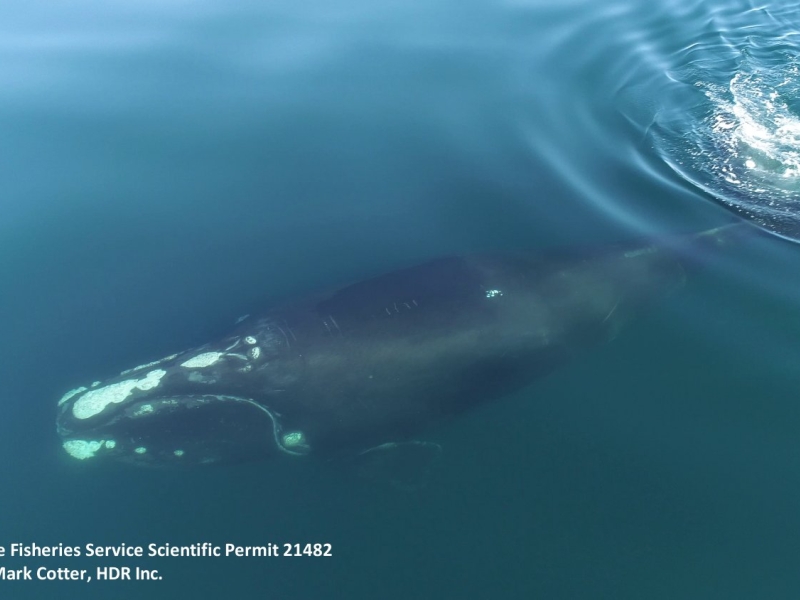
Tracking an endangered North Atlantic right whale
March 15, 2021
A yearling right whale was tagged off the coast of VA and tracked for 12 days.
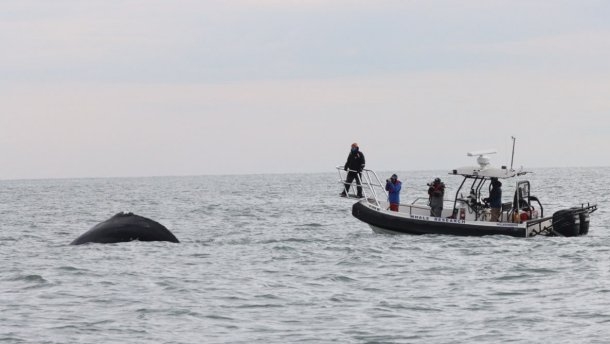
Entangled humpback whale
January 8, 2021
Our team assisted with the disentanglement efforts of a young humpback whale.
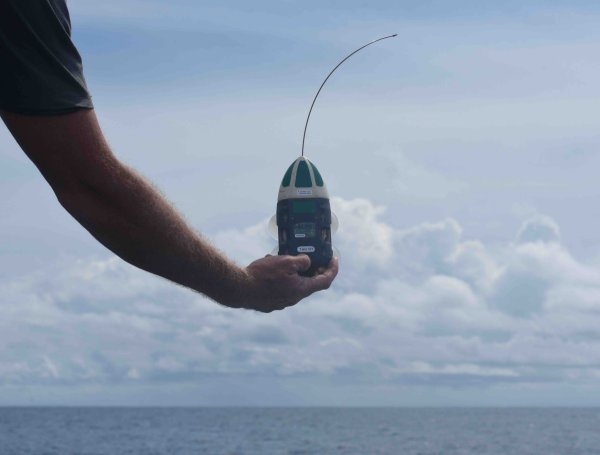
Atlantic BRS - Multi-scale CEE Success!
August 15, 2019
The first CEE while two different tag types were deployed.
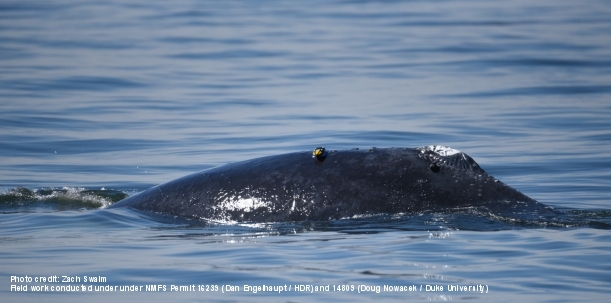
One whale tagged twice.
March 8, 2019
D-tag and limpet tag on a humpback whale.
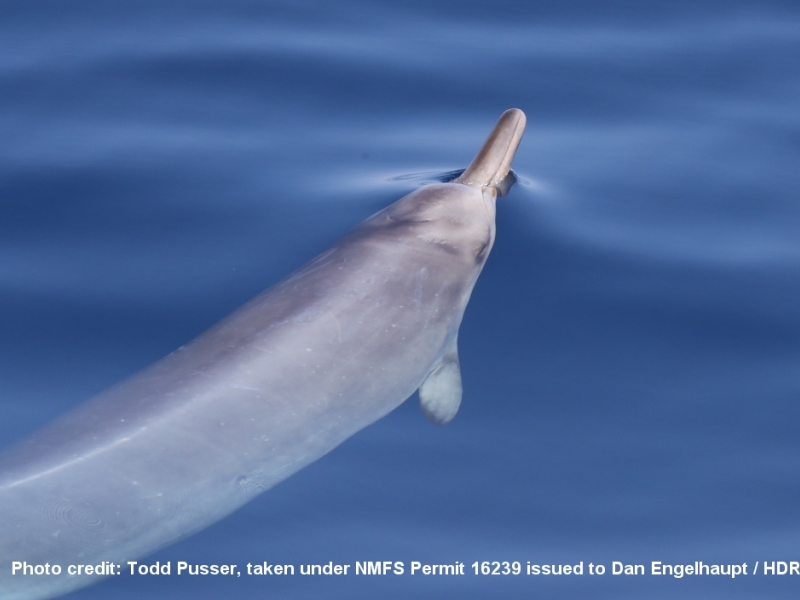
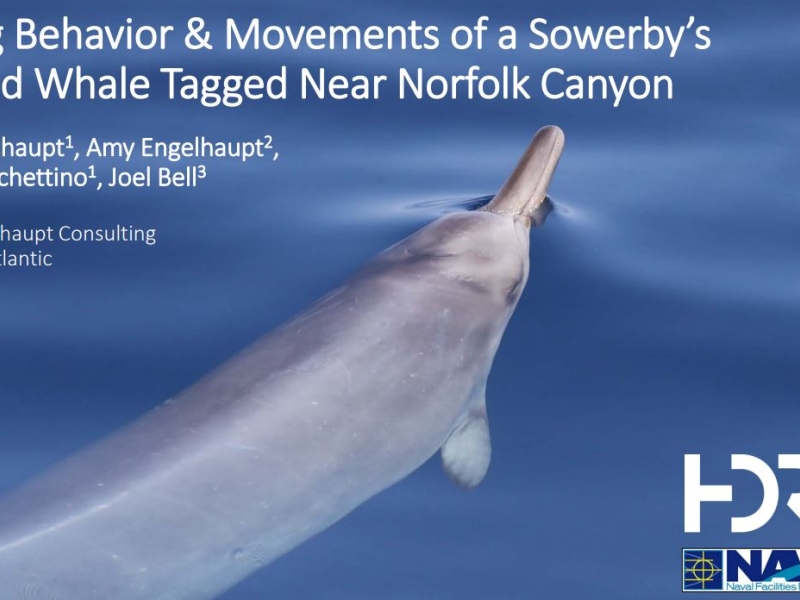
Sowerby's beaked whale tagged offshore of Virginia
September 12, 2018
A rarely seen beaked whale was tracked offshore.
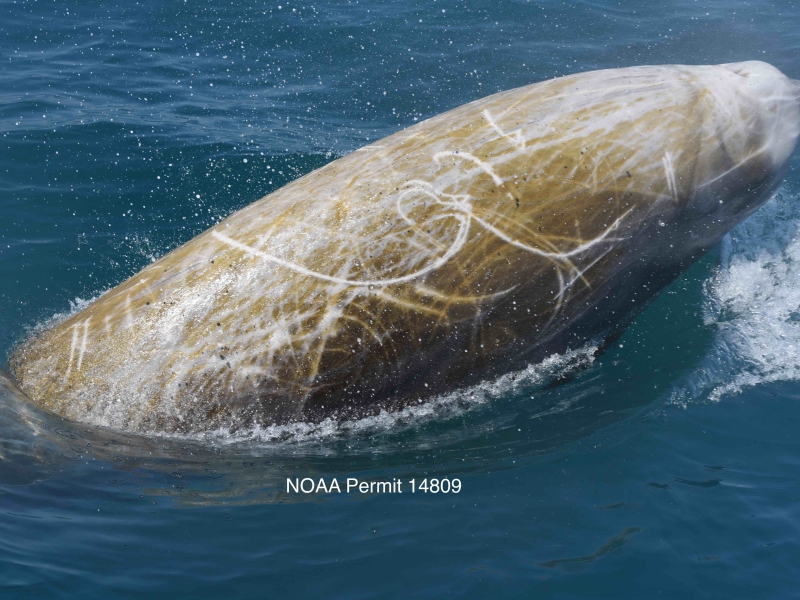
Atlantic BRS 2018 Field Work is Underway
May 18, 2018
The 2nd year of Atlantic BRS has begun.
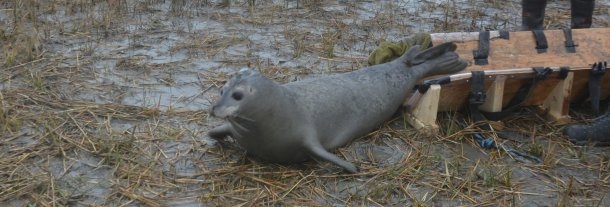
Seal Tagging Team Win!
February 6, 2018
Successful seal tag deployment on the Eastern Shore of VA.
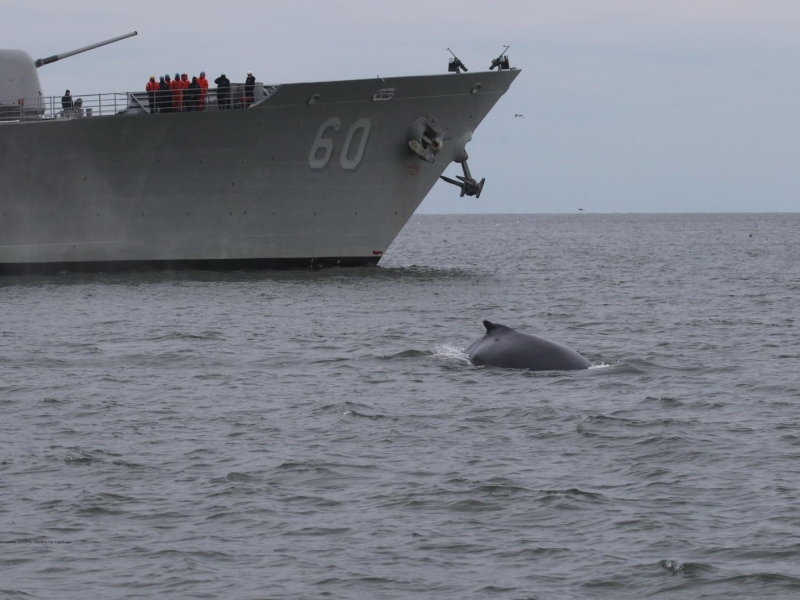
Repeat tagging customers to humpback monitoring project
January 30, 2018
Some interesting notes on site fidelity in Humpack whales.
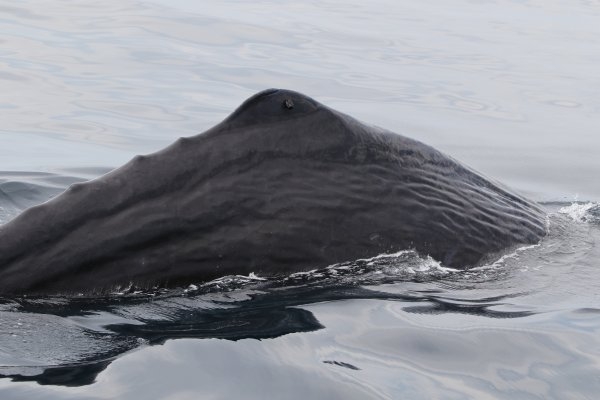
Sperm whales tagged off Virginia Beach
August 25, 2017
Several groups of sperm whales were sighted offshore of VA.
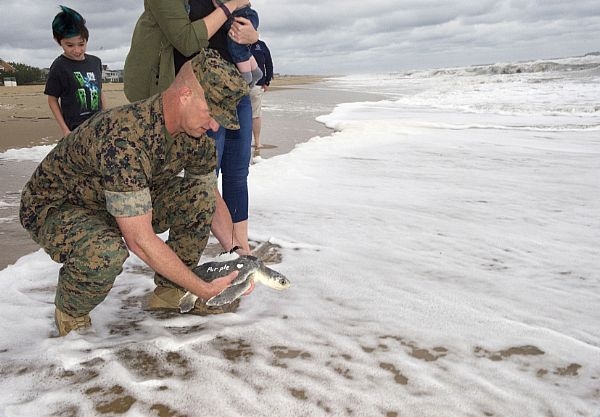
"Purple Heart" sea turtle released back into the ocean
June 12, 2017
Rescued sea turtle is tagged and released by a retired Marine.
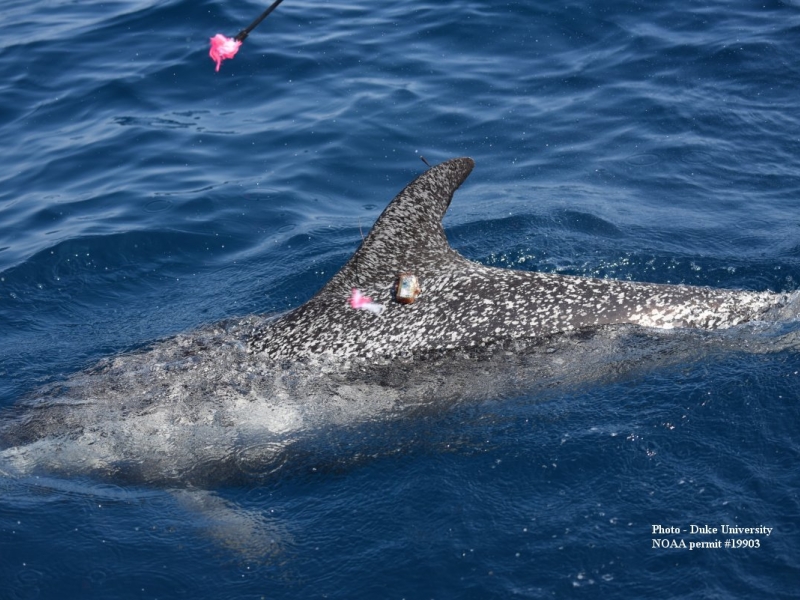
Bonus tagging in JAX
June 15, 2016
Odontocete tagging in Florida.
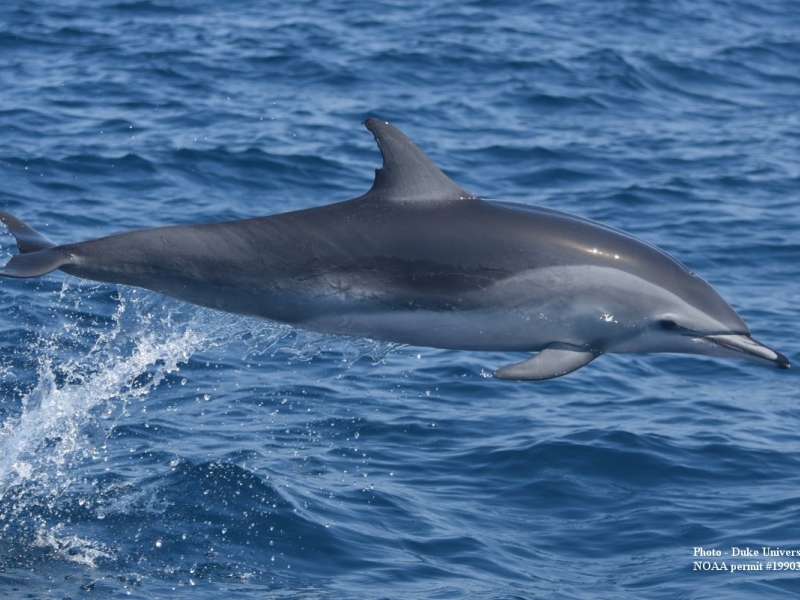
Banner day tagging odontocetes at Hatteras!
June 1, 2016
A busy field day in NC.
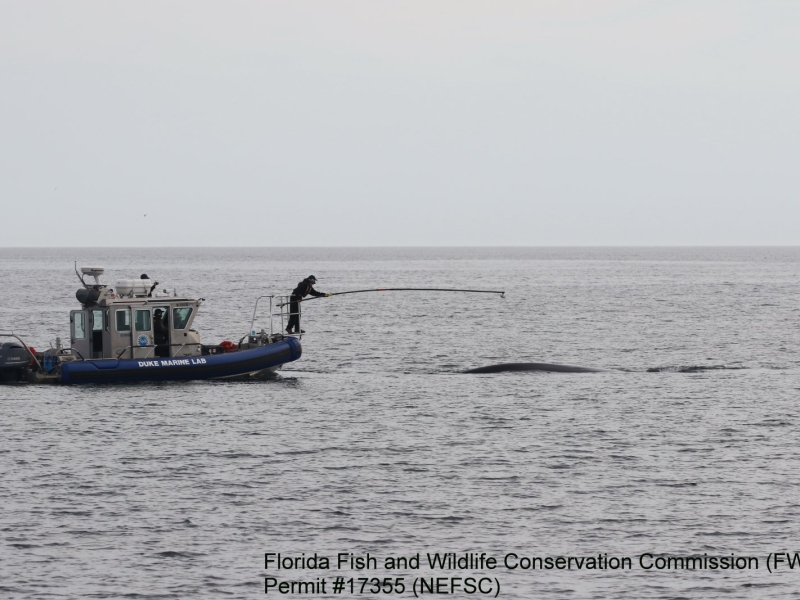
Tagging North Atlantic Right Whales
May 9, 2016
Southeast US tagging project has successful season.
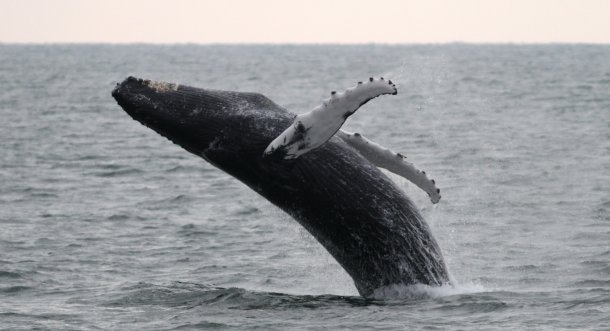
Tagging Atlantic Humpbacks
January 8, 2016
Year two of our Chesapeake Bay humpback whale project has begun!
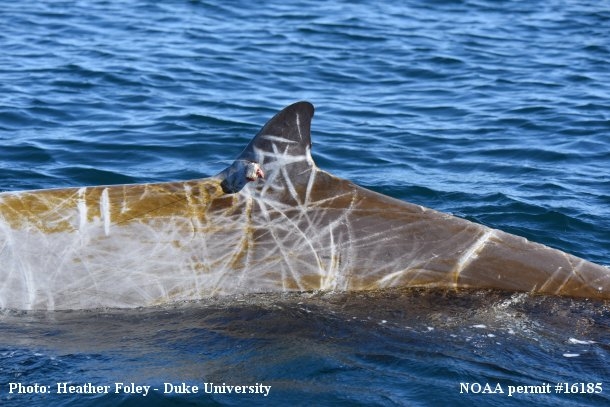
Hatteras tagging wraps up for 2015
November 10, 2015
The finale of a successful field season.
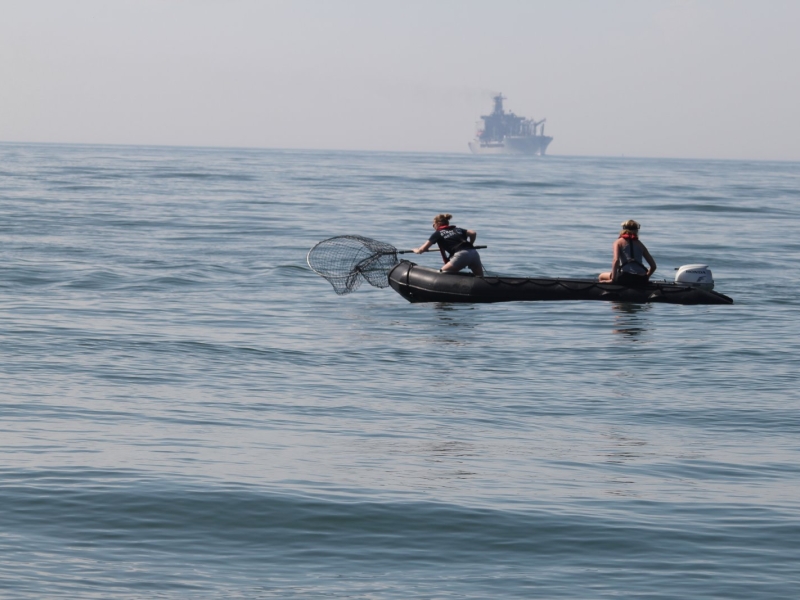
Turtle Tagging Season Has Begun!
May 18, 2015
Tagging loggerhead and Kemp's ridley sea turtles off Virginia.
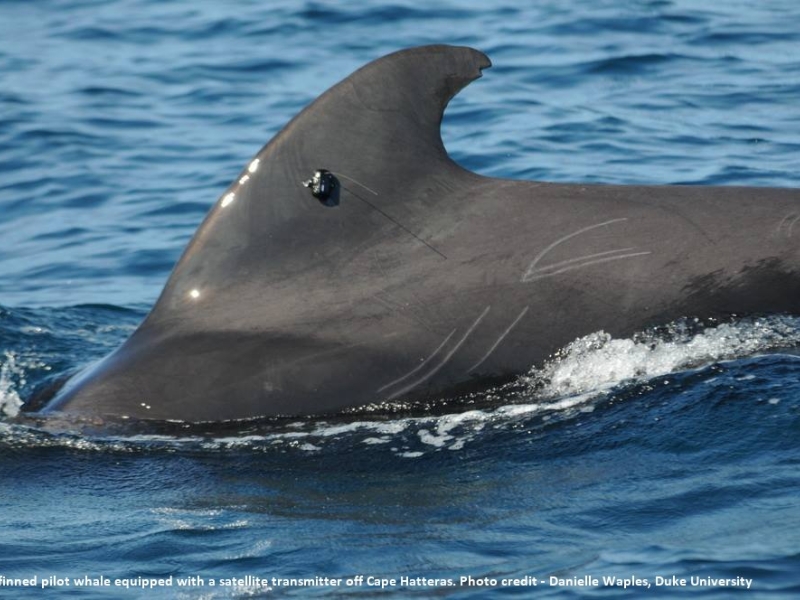
Tagging Deep Diving Odontocetes Off Cape Hatteras - Part 3
September 26, 2014
Details on the 3rd field session for the year.
Tagging Whales Off Cape Hatteras
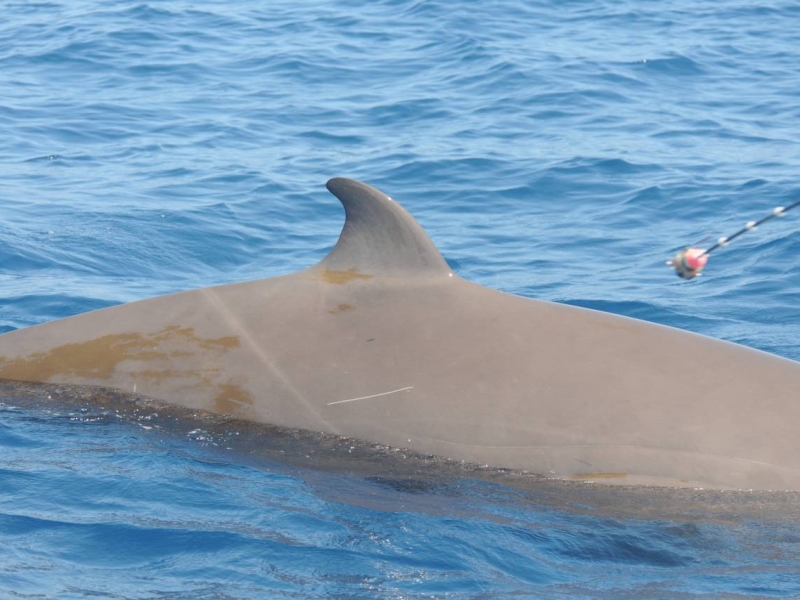
May 21, 2014
Learning about the movements of odontocetes.
Sea Turtle Rehabilitation and Release
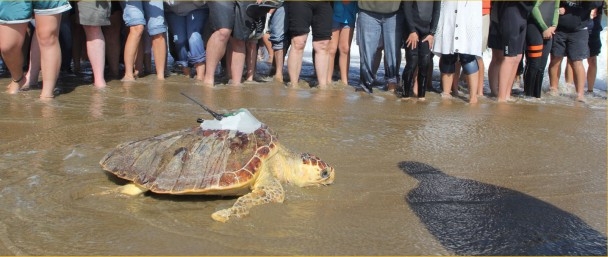
November 26, 2013
Tagging rescued sea turtles.
Cape Hatteras Field Work Update
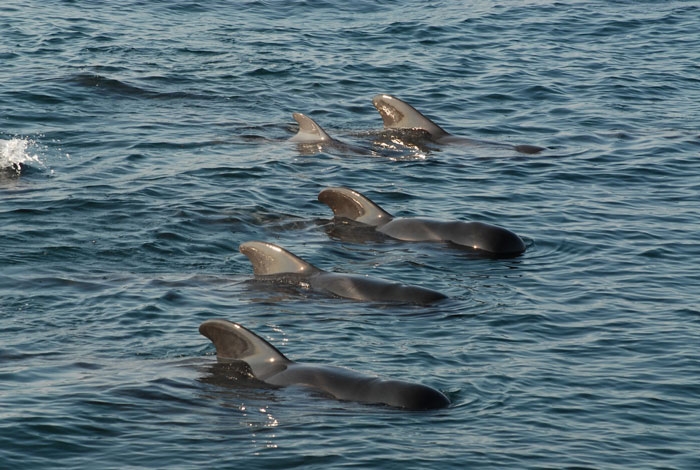
October 28, 2013
Calm days at sea off NC.
Atlantic sea turtle tagging project is underway!
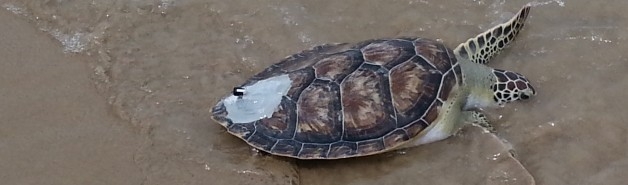
July 17, 2013
The start of a new turtle project.
Beaked whale distribution and seasonality in Southern California